
“I became deeply frustrated with the role of intermediaries in real estate deals,” explains Blake Owens, Founder and Principal of Augustus and the innovative platform Agrippa. &#...

Redefining Modular Construction: MMY US's Coast-to-Coast Vision

Written by:
Date:
13 Dec 2024
Share via Facebook

Share via Linkedin

Share via X

Copy to clipboard

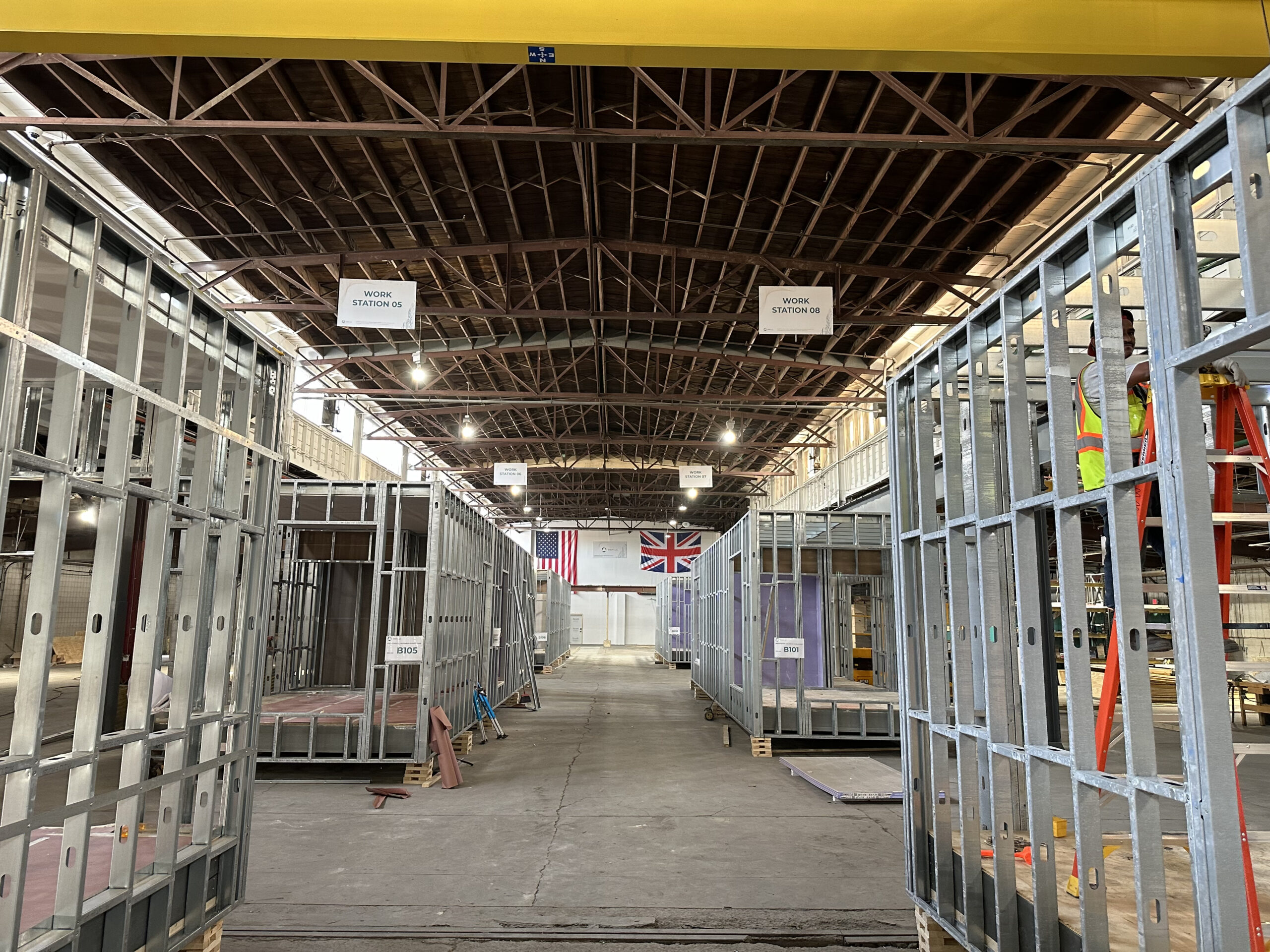
In an era where affordable housing shortages plague communities across America, MMY US’s first US facility is leveraging innovative modular construction technology to dramatically accelerate housing development timelines. MMY US, which established its Louisville, Kentucky facility just two years ago, has developed a construction system that can deliver multifamily housing projects in just 16 weeks – a fraction of the typical two-year timeline for traditional construction methods.
The company’s rapid success in the U.S. market stems from deep international expertise. Before launching their Kentucky operation, MMY Multiplex’s parent company spent over a decade consulting on some of the world’s most ambitious modular construction projects, including an 84,000-room development in Medina, Saudi Arabia. This extensive experience informed the development of their current innovative approach to affordable housing.
In the current U.S. housing market, construction delays and cost overruns have become increasingly severe. Traditional construction timelines have steadily increased over the past decade, creating major obstacles for housing development. “Housing is, in general, extremely slow and inconsistent at the moment, and this has been going up for the last 10 years,” explains Frederik Filz-Reiterdank, Chief Commercial Officer at MMY Multiplex. “It now takes almost two years to build an average multifamily project, and 90% of those overrun on budget, on average by 30%.”
One of the things that sets MMY US’s cutting-edge Multiplex system apart is their breakthrough approach to transportation logistics. The company has developed an 11-foot-wide chassis design compatible with railway systems – a first in the industry. “Modular manufacturers can only service their local market at a competitive price due to transportation cost,” explains Filz-Reiterdank. “And if you can use a railway system, then suddenly that transportation price is negligible. And as such, we can ship all across the United States.” This innovation dramatically reduces transportation costs over long distances, while traditional modular manufacturers are typically limited to serving markets within a few hundred miles of their facilities due to prohibitive trucking costs.
Their manufacturing process combines precision with efficiency. Each project begins with creating a digital twin model, ensuring exact specifications are met before production begins. The modules are manufactured in a controlled factory environment, where interior finishes, MEP systems, and exterior installations are completed before transportation to the site.
While maintaining this precision manufacturing approach, the company’s commitment to community impact extends beyond housing delivery. Their Louisville facility employs over 50% low to moderate-income workers, offering an average wage of $30 per hour and ability to produce 1,000 modules annually. Their portfolio includes various projects, from traditional brick-faced affordable housing developments to more contemporary designs that challenge preconceptions about affordable housing aesthetics.
Responding to the pressing demand for affordable housing solutions, the company is poised for remarkable growth, projecting a five-fold increase in production output for the coming year. Their railway-compatible transportation system positions them uniquely in the market as cities across the country grapple with housing shortages. The company is also making inroads with government entities at local, state, and federal levels to develop standardized solutions for different income levels.
“We’ve got some very interesting initiatives in the works,” notes Filz-Reiterdank, discussing their government collaboration strategies. “As a city, state or federal player, you can design your own portfolio of suitable buildings. For example, you would have solutions for different income levels – 30%, 50%, and 80% of the Area Median Income; which you can then repeatedly deploy. This creates repeatability and economies of scale from ordering from a manufacturer, allowing for rapid deployment of affordable housing solutions across different communities.”
As modular construction adoption continues to grow in the United States – from 1% of new construction projects a decade ago to approximately 7% today – MMY Multiplex stands ready to help communities meet their affordable housing goals with speed and efficiency that traditional construction methods simply cannot match.
Similar Articles
Explore similar articles from Our Team of Experts.