

The data center sector continues to experience rapid growth driven by artificial intelligence applications, despite recent concerns about potential overbuilding and computational efficiency ...

Houston's Harris County Has Six Months of Inventory. Galveston Has Two and a Half Years.

Written by:
Date:
14 Sep 2026
Share via Facebook

Share via Linkedin

Share via X

Copy to clipboard

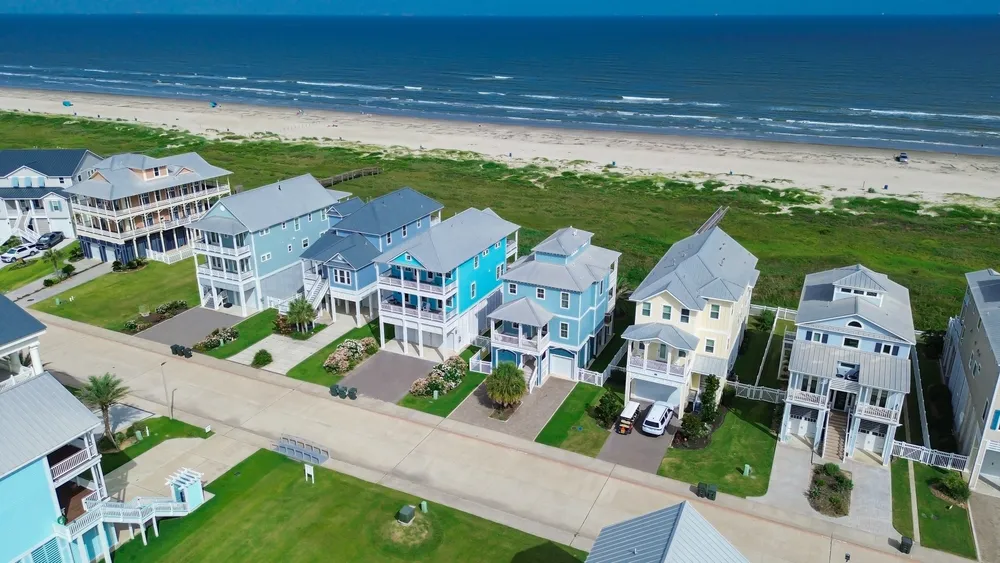
The gap between Houston’s residential market and its coastal neighbor shows what happens when short-term rental speculation meets a correction.
Harris County, Texas, currently has roughly six months of housing inventory – enough to classify it as a balanced-to-soft market where sellers need to price carefully and present homes in strong condition. But the sharper story sits just down Interstate 45 in Galveston County, where inventory has reached approximately 28 to 29 months, according to Sandra Marconi, a 23-year real estate veteran who leads the Marconi Team at Keller Williams in Houston and operates short-term rental properties in Galveston. A property listed there today could take more than two years to sell, regardless of condition.
The divergence traces back to the pandemic-era short-term rental boom. “Everybody got in during COVID. It didn’t work for them as short-term rentals,” Marconi says. “Now they’re wanting to get out, and now they can’t sell their property, and they’re going to take a massive hit on it.”
What’s Moving and What Isn’t
In Harris County, lower-priced homes are selling faster than higher-priced ones. First-time buyers and move-up buyers, families who have outgrown a starter home, make up much of the active demand. But how quickly any individual property sells depends heavily on three factors Marconi returns to repeatedly: location, condition, and pricing.
A home priced accurately and presented well can sell in a week. One that misses on any of those three factors can sit for months. Marconi points to a deal she closed recently: the team priced the home at market value and received a full-price offer. “We did not overprice the home. We priced it right on the nose of where we needed to be.”
The flip side is just as clear. She describes a prospective client who wanted to list at $725,000. After Marconi and her appraiser reviewed comparable sales, they placed the value closer to $675,000 to $680,000. The team declined the listing. The seller listed with another agent at $700,000, sat on the market for nearly a month, then made a $5,000 price reduction, a move Marconi considers far too small. “They need to do a bigger reduction than just that.”
The Pricing Discipline That Defines This Market
With six months of supply, Harris County sellers face a different reality than the pandemic frenzy that rewarded minimal effort. Marconi says some sellers still carry expectations shaped by that period, but the math no longer supports them. During COVID, she notes, “you could just stick a sign in the yard, and it would sell.” That era is over.
Her advice to sellers who need to move quickly is direct: price slightly below market value. Condition matters as much as the number on the listing. A home listed at $700,000 with worn carpet, for example, sends a signal that extends beyond the flooring itself. “They’re going to automatically think, well, the carpet’s not good. What else is not good?” Marconi says.
Homes that aren’t in strong condition tend to end up selling to investors rather than owner-occupants, a different buyer pool with different pricing expectations. Setting realistic timelines is part of the same conversation. Marconi tells sellers up front that selling could take up to six months. “If you need to move faster than that, then we need to list at a lower price.”
Galveston’s Short-Term Rental Overhang
The Galveston market shows what an inventory crisis looks like in concentrated form. With nearly two and a half years of supply, the county is firmly a buyer’s market, and much of that inventory traces to owners who entered the short-term rental space during the pandemic without running it as a business.
Marconi, who owns two condos in Galveston that she describes as consistently booked, attributes her own results to operational systems and choosing the right location, near the water, with pool access. She has automated the management side, has a reliable cleaning team in place, and carries the insurance the area requires, including wind and flood coverage. Many operators who entered during the pandemic lacked that infrastructure. The result is a market flooded with listings from owners trying to exit.
For investors, the overhang creates opportunity. Marconi confirms she is seeing buyers take advantage of the oversupply to purchase at a discount. But navigating Galveston requires understanding building-level restrictions. Some complexes prohibit short-term rentals entirely, allowing only midterm arrangements. “They don’t play nicely on the island at all,” Marconi says of enforcement.
Booking patterns have also shifted. Marconi says more guests are booking through VRBO rather than Airbnb, driven by frustration with Airbnb’s fee structure. She still receives bookings through both platforms, but VRBO traffic has picked up noticeably.
A Market That Isn’t Turning Around Soon
Marconi does not expect a quick rebound. Citing Keller Williams chairman Gary Keller’s outlook, she says the current market conditions could persist for another one to five years. The implication for agents is direct: those without strong pricing discipline and experience will struggle to sustain their businesses. She is already seeing agents leave the industry and expects that trend to continue.
She also notes a generational headwind on the buyer side. High student loan balances and credit card debt are preventing some younger buyers from qualifying, a constraint she hears about from other agents even though her own client base, built largely on past clients, sphere of influence, and referrals, has been less affected.
For buyers with the financial position to act, Marconi sees the current environment as favorable. Today’s mortgage rates in the 6% to 7% range represent a historical norm, not an anomaly, she argues. “When we bought our first house in 1983, our interest rate was 17 and three quarters.” Buyers who recognize that rates are unlikely to return to the 3% to 4% range seen during the pandemic are the ones making moves now, and in a market with six months of supply in Harris County and over two years in Galveston, they have negotiating leverage that did not exist three years ago.
About the Expert: Sandra Marconi is a 23-year real estate veteran who leads the Marconi Team at Keller Williams in Houston and operates short-term rental properties in Galveston, Texas.
This article is based on information provided by the expert source cited above. It is intended for general informational purposes only and does not constitute legal, financial, or real estate advice. Readers should conduct their own research and consult qualified professionals before making any real estate or financial decisions.
Similar Articles
Explore similar articles from Our Team of Experts.