

The Florida real estate market has experienced a significant shift since COVID-19, moving from a traditional seasonal destination to a year-round luxury haven that rivals California’s ...

In Lake County, Illinois, Nearly Half of Homes Sell Above List Price

Written by:
Date:
14 Sep 2026
Share via Facebook

Share via Linkedin

Share via X

Copy to clipboard

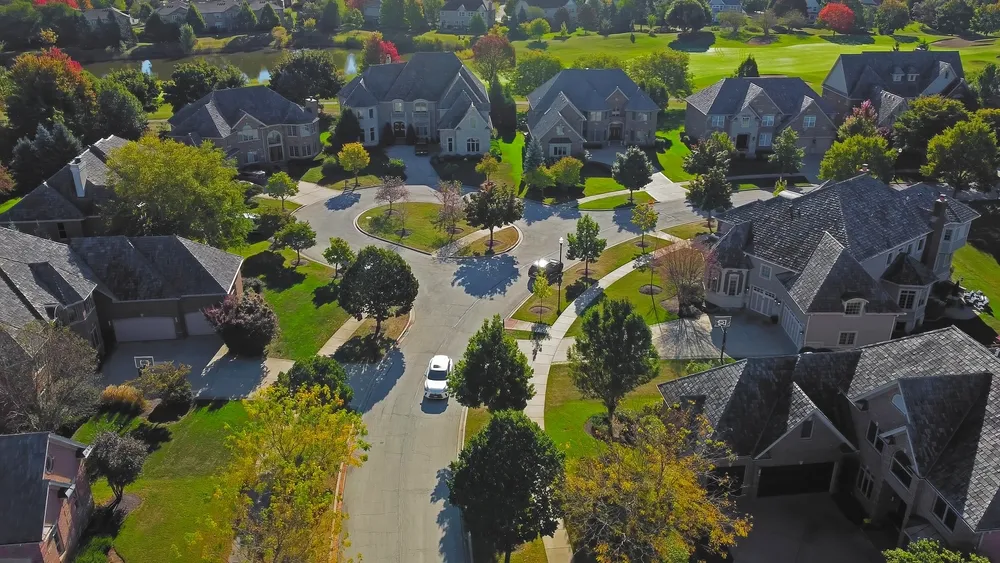
Lake County, Illinois spans a housing market so wide it includes both $60,000 properties and $5 million estates within a single county. That range alone makes it unusual. What stands out right now is the intensity of buyer competition: according to Redfin data cited by Saieshwar Chikoti, a member of RE/MAX Top Performers, as of July, 48.3% of listed properties in the county have sold above list price. The median sale price is up 8.6% year over year, with price per square foot climbing 9%. Listings have also increased 14% compared to last year, but even that additional inventory is not easing pressure on buyers.
Chikoti, 22, works primarily in Lake and Cook counties and focuses heavily on listings. His read on the market is direct: sellers are confident, buyers are strained, and the dynamics are not softening.
School Districts Are Setting the Floor
The driver behind much of the demand is school quality. Lake County is home to several of the top-ranked public school districts in Illinois, including those feeding into Stevenson High School and the District 103 system, which includes Daniel Wright Middle School. Chikoti says families prioritize education to such a degree that they will pay well above appraised value and sign appraisal gap addendums, agreeing to cover the difference between the purchase price and the appraisal out of pocket, to secure a home in the right district.
In certain neighborhoods, that demand concentrates sharply. Chikoti describes the Waterbury community as a pocket where listings draw multiple offers almost immediately. He recently listed a property there and received four offers on the first day, with two more the following day. Proximity to the Stevenson school district, he says, is the main reason.
In a separate listing in Deerfield, Chikoti priced a property around $680,000 and received seven offers within two days. It sold for $780,000. “On the seller side, my seller was super confident that he was going to sell it for a good price,” he says. “But buyers are so cautious that they’re trying to get in so bad, but the supply is so much less than the demand.”
That imbalance has practical consequences. Buyers are making sacrifices on features and budget, routinely bidding above what they originally planned to spend. Some are signing appraisal gap addendums even when properties appraise below the purchase price, paying above market value solely to land a home in the right school district. In a market where interest rate concerns might normally slow activity, Chikoti says Lake County buyers are largely undeterred. “A lot of buyers have been having to make a lot of sacrifices with regard to what they want and the purchase price,” he says.
Sellers, meanwhile, have little reason to offer concessions. With multiple offers common, Chikoti says sellers can simply move to the next bidder if a buyer asks for credits or repairs. Most buyers, aware of this dynamic, are not even requesting them.
The Renovation Gap Creates a Pricing Window
One of the more specific patterns Chikoti describes involves the spread between renovated and non-renovated properties in certain Lake County zip codes. He estimates that renovated homes trade at roughly $246 per square foot, while run-down stock in the same market trades at about $140 per square foot, a gap of approximately 70%.
That spread has shaped his advice to both buyers and sellers. For buyers with some tolerance for renovation, the approach is to target properties in the $140-per-square-foot range and invest roughly $30,000 in updates. For sellers sitting on dated properties, Chikoti recommends spending $30,000 to $40,000 on renovations before listing, arguing the return on that investment is substantial in a market where condition drives premiums of that size.
On-Market Investment Deals Have Essentially Disappeared
For investors considering Lake County, Chikoti’s assessment is direct: finding a viable deal on the open market is close to impossible. “It is imperative to find a property off-market,” he says. He estimates that perhaps 0.1% of on-market listings represent a good investment opportunity at current pricing.
Off-market sourcing, by contrast, has produced results. Chikoti describes purchasing a property in Waukegan roughly five or six months ago that he estimates would have listed for $50,000 to $80,000 more on the open market. The seller wanted to avoid foot traffic and a drawn-out process, which created pricing room that does not exist in competitive listed transactions.
As for where appreciation may be headed, he points to three areas within the county: North Chicago, Waukegan, and Volo. In North Chicago, he attributes rising property values in part to investment by AbbVie in local school districts, which has attracted new development. Volo, he says, is also drawing interest as a community with active new construction.
Buyer Fatigue Is the One Risk Worth Watching
Chikoti does not see major headwinds threatening the market in the near term. Seasonal patterns will bring the usual slowdown as summer ends and the holiday season approaches, but the structural demand driven by school quality remains intact. The median sale price increase of 8.6% year over year and the 48.3% above-list-price rate both indicate a market where supply has not caught up to demand despite the 14% increase in listings.
The one risk he flags is psychological: buyer fatigue. Repeated losses in competitive situations, combined with the need to overbid and waive protections, could gradually cool demand, not because fundamentals have changed, but because buyers tire of the process. “The burgeoning tiredness of buyers from not being able to find a property,” he says, “can in the near future definitely cool down buyer demand.”
For buyers currently competing in Lake County, the calculus depends on how long they are willing to absorb that pressure. In a market where nearly half of homes sell above asking price and concessions are effectively unavailable, the cost of waiting is not lower prices; it is continued competition for the same limited inventory.
About the Expert: Saieshwar Chikoti is a member of RE/MAX Top Performers, working primarily in Lake and Cook counties, Illinois.
This article is based on information provided by the expert source cited above. It is intended for general informational purposes only and does not constitute legal, financial, or real estate advice. Readers should conduct their own research and consult qualified professionals before making any real estate or financial decisions.
Similar Articles
Explore similar articles from Our Team of Experts.