If you own a home in southern New Hampshire right now, selling it probably won’t be your problem. Homes still move quickly, often at or above asking price. The real challenge – the o...

DFW First-Time Buyers Are Choosing Longer Commutes to Get Lower Rates

Written by:
Date:
14 Sep 2026
Share via Facebook

Share via Linkedin

Share via X

Copy to clipboard

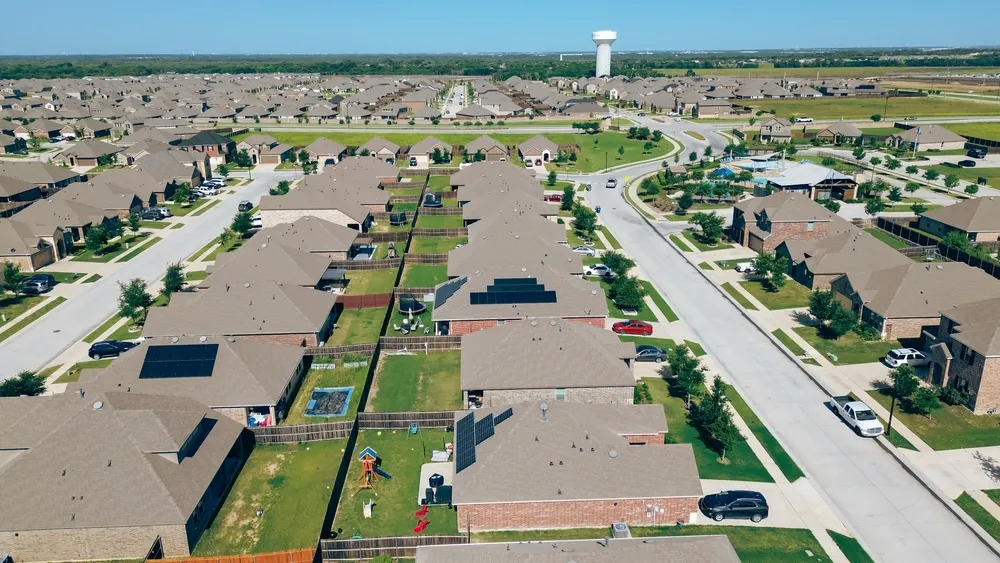
Across the outer suburbs of Dallas-Fort Worth, new-construction builders are offering mortgage rates that start around five percent – well below what most buyers can get on the open market. The catch is that those homes sit in outlying communities where the drive to work, shopping, and services is significantly longer. For first-time buyers already squeezed by affordability, the tradeoff reshapes what entry-level homeownership actually looks like in DFW.
Lisa Henry-Weaver, a Collin County, Texas-based agent with the Lisa Henry Group at Coldwell Banker Apex, Realtors, has been watching this pattern sharpen through the first half of 2026. She says the sub-$500,000 segment of the market, where most first-time buyers shop, has become the slowest-moving tier in Collin County. The builders pulling those buyers outward with rate incentives are changing where and how first-time purchases happen across the metro.
Why Renting Still Wins on Monthly Cost
The math facing first-time buyers in DFW is punishing. Henry-Weaver says mortgage rates in her market are running between six and seven percent, and she recently executed a contract where the buyer locked in at eight percent. At those levels, a monthly mortgage payment on a home under $500,000 often exceeds what the same buyer would pay in rent for a comparable space.
Henry-Weaver is direct about the consequence: “Those buyers can go out and rent for cheaper than what they can have a house payment for.” That gap weakens the traditional argument for homeownership – that your payment builds equity instead of going to a landlord – when the payment itself runs well above rent. Some buyers are pushing forward anyway, hoping rates will eventually drop enough to refinance, according to Henry-Weaver. But no timeline for rate decreases is guaranteed.
This affordability squeeze explains why homes under $500,000 are sitting longer than pricier listings in Collin County. The buyers who would naturally fill that segment are either priced out entirely or choosing to keep renting.
The Builder Rate Incentive and the Commute Tradeoff
Into that gap, builders in outlying DFW communities are stepping in with a powerful lure. Henry-Weaver notes that some are offering starting interest rates around 4.99 percent, a rate that drops the monthly payment dramatically compared to what the same buyer would get through a conventional lender on a resale home. These new-construction neighborhoods are priced under $500,000 and, in many cases, under $300,000, making them accessible to first-time buyers who are otherwise frozen out.
But the geography matters. Those developments sit at the edges of the metro, and as Henry-Weaver puts it, “the buyers are having to drive a lot further to get anywhere.” That means longer daily commutes and less proximity to the retail and commercial growth concentrated in cities like Frisco, McKinney, and Allen, areas Henry-Weaver identifies as seeing strong activity.
A Market Split by Price
What makes this dynamic worth watching is how sharply it divides the Collin County market. Homes above $500,000 are moving at a steadier pace, according to Henry-Weaver. She listed a home in Murphy at $1,075,000 that went under contract in four days at full asking price. Meanwhile, homes in the sub-$500,000 tier are taking 30 to 60 days to sell, a dramatic change from four or five years ago, when Henry-Weaver says listings would go under contract within hours.
That split creates an unusual situation: the most affordable homes on paper are the hardest to sell, because the buyers who need them most are the ones least able to afford current rates. Builders on the fringe are absorbing some of that demand, but they are doing so by relocating it geographically, not by closing the gap between mortgage costs and rents.
Henry-Weaver describes the broader Collin County market as stable rather than cooling or heating up. Sellers who price accurately are finding buyers. She points to the Murphy listing as evidence: the sellers listened to her pricing recommendation, and the result was a contract in four days and a closing within 30 days. Sellers who overprice, by contrast, end up selling at the figure the data originally supported, after weeks of lost time. She describes one seller who insisted on listing at $450,000 in a $400,000 neighborhood. He hired a different agent, listed at his price, and the home sold for $395,000.
For first-time buyers weighing the builder incentive, the question is not simply whether a subsidized rate makes the monthly number work. It is whether the total cost of living in a more remote location, commute distance, fuel, and access to services still holds up once everything beyond the mortgage payment is accounted for. Henry-Weaver notes that communities like Wylie, which had roughly 2,500 to 3,000 residents when she graduated high school in 1984, have grown to over 60,000, with new retail including an HEB, a planned Trader Joe’s, and a Costco about to break ground. But not every outlying community has that kind of commercial momentum, and buyers should look carefully at what infrastructure actually exists before committing to a location built around a rate incentive.
About the Expert: Lisa Henry-Weaver is a broker with Coldwell Banker Apex, Realtors, who has worked in Collin County, Texas, for nearly three decades.
This article is intended for informational purposes only and does not constitute legal, financial, or investment advice. The views and opinions expressed herein reflect those of the individuals quoted and do not represent an endorsement of any company, product, or service mentioned. Readers should conduct their own due diligence and consult qualified professionals before making any investment decisions.
Similar Articles
Explore similar articles from Our Team of Experts.