

Real estate agents signed up to work with people: to build relationships, negotiate deals, and guide clients through one of the biggest financial decisions of their lives. They did not sign ...

In North Orange County, California, Single-Story Homes Have Become the Market's Clearest Pricing Divider

Written by:
Date:
14 Sep 2026
Share via Facebook

Share via Linkedin

Share via X

Copy to clipboard

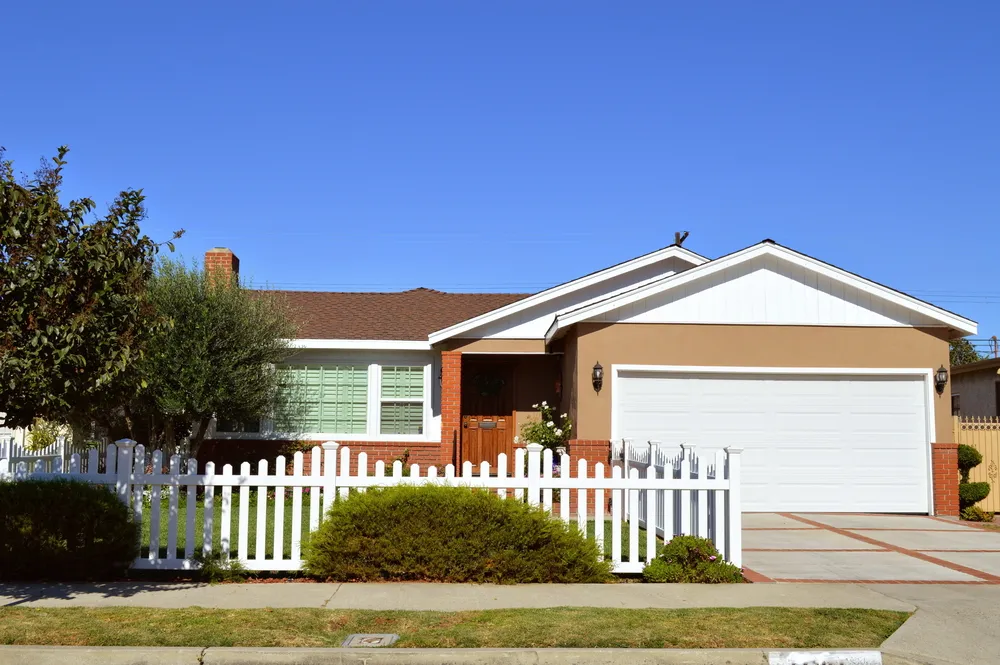
Two houses in the same neighborhood, same size, same condition – and the single-story sells for more and sells faster. That pricing gap has been widening in North Orange County, California, for roughly five to seven years, according to Darryl Jones, a 36-year veteran of the market who leads the Darryl & JJ Jones Team at ERA North Orange County Real Estate. The driver is straightforward: an aging population that needs to get away from stairs. The dynamic now functions as one of the market’s most reliable indicators of demand, cutting across price points and neighborhoods in ways that broader inventory data alone does not capture.
“You get two houses in the same neighborhood, same condition, same size, everything, the single story is going to be worth more just because there’s bigger demand,” Jones says. Before this shift took hold, two-story homes typically sold for the same or more. That math has reversed, and two-story homes are now taking longer to sell as a result.
Who’s Driving the Premium
The buyers pushing single-story prices higher are primarily homeowners aged 60 and above – and more commonly 70-plus – who are selling larger two-story homes and moving into smaller, single-level properties. They tend to arrive with both equity and cash. Jones describes a typical transaction: selling a 3,000-square-foot, five-bedroom house and purchasing an 1,800-square-foot single-story home.
The motivation is not purely preference. “They don’t want stairs and they also realize the danger of stairs,” Jones says. For a growing share of the buyer pool, what was once an aesthetic choice has become a functional requirement driven by practical health risk.
Inherited Homes and the Pricing Advantage They Carry
The same demographic trend feeding single-story demand is also generating a growing volume of inherited-home sales. Jones says this segment has been expanding for at least five years, driven by the natural aging of homeowners who purchased in the 1960s and 1970s and held their properties for decades.
These transactions tend to move more smoothly than traditional sales for a specific reason: less emotional attachment to the property’s perceived value. Sellers who renovated a kitchen or added landscaping often expect those improvements to carry more market value than they do. Heirs, by contrast, typically have no such attachment. “They’re oftentimes more realistic, and that’s helpful,” Jones says.
In a market where pricing accuracy determines whether a listing attracts offers, that realism carries weight. Jones is direct about the stakes: “You can have perfect staging, the perfect house, perfect landscaping, perfect photos, internet exposure, everything. But if it’s priced wrong, it won’t work.”
A Slower Market That Still Rewards Accuracy
North Orange County has slowed compared to one, two, and especially three years ago, according to Jones. Inventory has risen, a normal seasonal pattern for summer, but also part of a broader trend. Price reductions are more common. Buyers have more choices and, in some cases, still say they do not have enough.
Jones draws a distinction between price cuts that reflect declining values and those that reflect sellers correcting an initial overprice. A home worth roughly a million dollars that was listed at $1.3 million and later reduced did not lose value; the seller adjusted to where the market already was. Buyers and observers looking only at price-cut data risk misreading the market’s actual direction.
The entry-level segment remains the most active, which Jones attributes to simple math: more buyers qualify at lower price points. The higher the price, the fewer qualified buyers exist, and the longer homes sit. Properly priced listings, however, still generate multiple offers. One recent listing drew 31 offers and is currently $200,000 over asking. Another, in the city of Placentia, sat for roughly 47 to 50 days and attracted around 30 offers before closing at the seller’s target price.
“You are hearing fewer and fewer of these stories,” Jones says. “But we’re still seeing, luckily here in North Orange County, a healthy market for a proper listing.”
For sellers, the implication is direct: the market still rewards well-priced homes with strong competition, but the margin for error on pricing has narrowed. A listing priced even modestly above comparable sales now risks sitting long enough to require a reduction – which Jones says does not necessarily mean the market dropped, but does mean the seller misjudged it.
What’s Shaping Buyer Decisions
Beyond pricing and home layout, Jones says the factors pulling buyers toward specific cities within North Orange County are practical: proximity to work, proximity to family, and commute times. In a region where even a five- or ten-mile move can significantly reduce time spent in traffic, location decisions often hinge on daily logistics rather than neighborhood prestige.
Jones also notes that some buyers are arriving from Los Angeles County. At a recent open house, he met several people relocating from LA into Orange County, drawn, he says, by cleaner surroundings and lower crime, along with the area’s proximity to freeways, parks, beaches, and mountains.
The general mood among both buyers and sellers is cautiously positive, according to Jones. Buyers are pleased to have more choices than they did six months or a year ago. Some sellers, however, still carry a mindset shaped by the peak conditions of two or three years ago, when pricing felt almost discretionary. Jones says he addresses that gap with data, bringing comparable sales to every pricing conversation.
“Nobody likes the higher interest rates,” Jones says. “But it is what it is.”
What Jones Is Watching Next
Jones says he tracks inventory levels as his primary market indicator. The number of active listings in a given city tells him more about market health than most other data points. “If that goes down to 30 homes, that means it’s a stronger market,” he says. “It’s pretty simple supply and demand.” Interest rates and global politics round out the variables he monitors, though neither is within anyone’s local control.
His advice to sellers stays practical: price accurately, present the home well, and recognize that discipline produces better results than ambition. “Price is the most important thing,” he says, “because price can overcome any objections.”
About the Expert: Darryl Jones is a 36-year veteran of the North Orange County, California market. Broker associate and team lead for the Darryl & JJ Jones Team at ERA North Orange County Real Estate.
This article is based on information provided by the expert source cited above. It is intended for general informational purposes only and does not constitute legal, financial, or real estate advice. Readers should conduct their own research and consult qualified professionals before making any real estate or financial decisions.
Similar Articles
Explore similar articles from Our Team of Experts.