
Jacksonville’s real estate market has shifted decisively in favor of buyers over the past year. What was once a competitive seller’s market is now defined by high inventory, widespread c...

North Jersey's Housing Market Moves in Waves. The Outer Counties Are Shifting First.

Written by:
Date:
14 Sep 2026
Share via Facebook

Share via Linkedin

Share via X

Copy to clipboard

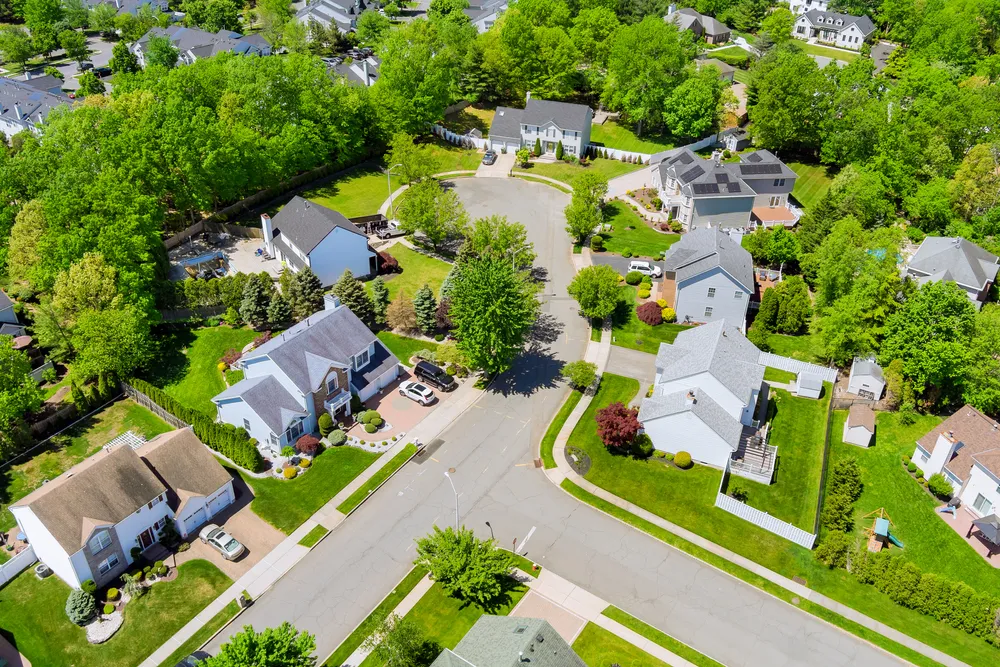
In most metro-adjacent housing markets, demand does not rise and fall evenly. It moves geographically, spreading outward from the employment center in a pattern that rewards close attention to where buyers are landing and where they are pulling back. In North Jersey, that pattern is playing out with unusual clarity right now, and the implications differ sharply depending on which county a seller or investor is watching.
The five counties fanning out from the George Washington Bridge and Lincoln Tunnel, Bergen, Essex, Morris, Passaic, and Sussex, function less as a single market than as a series of concentric rings, each with its own inventory dynamics, pricing floor, and competitive intensity. Julia Gaffney, founder and team lead of Elevate Real Estate Group at Keller Williams Prosperity Realty, describes the demand pattern as a wave. Buyers priced out of Bergen County, one of the most expensive counties in the country, move to Morris. When Morris inventory tightens, they push into Passaic. After Passaic, Sussex. “It’s like a wave,” Gaffney says. “And the inventory has not recovered in Bergen County since the pandemic.”
Where Inventory Stands
The numbers in Gaffney’s home market of West Milford, in Passaic County, illustrate how compressed supply became and how slowly it is normalizing. When she entered the business 14 years ago, active inventory sat at roughly 220 units. During the pandemic-era trough, it dropped to 36. It now sits at 103, a meaningful recovery from the low but still less than half of pre-pandemic levels.
Bergen, Essex, and Hudson counties remain firmly in seller’s market territory, with multiple-offer situations still common on correctly priced listings. Morris County inventory is rising slightly but remains competitive. The observable shift is happening further out. Sussex County, the most distant ring from Manhattan, began showing longer days on market and price reductions roughly six months ago. That softening is now reaching Passaic County and beginning to appear in parts of Morris.
“Anything that is going to change, it’s going to change in Sussex County first and then start moving its way back towards New York City,” Gaffney says.
The Commute Calculus That Surprises Buyers
One dynamic pulling New York buyers into North Jersey is counterintuitive: despite being farther from Manhattan in absolute distance, some North Jersey towns offer shorter actual commute times than parts of New York City’s outer boroughs. Gaffney points to a recent closing in Kinnelon, an $805,000 sale to buyers relocating from Queens, as an example. The buyers targeted the town specifically for its blue-ribbon school district. The property sat on an acre, a scale of land that would cost multiples more in their previous neighborhood. And the husband’s commute into the city, roughly an hour, was competitive with what he had been doing from Queens.
“Their commute into New York City is longer than their commute from New Jersey,” Gaffney says of buyers making similar moves from Long Island and the outer boroughs. Train access, bus routes, and proximity to the Lincoln Tunnel or George Washington Bridge all factor into which towns command premiums, and which remain accessible.
Pricing by Town, Not by Region
The practical consequence of this layered geography is that pricing decisions must be made at the town level. Gaffney presents sellers with a price range based on comparable sales specific to their municipality, sometimes a $15,000 to $20,000 swing, sometimes $50,000, depending on the depth of recent data. In towns where inventory is rising, she advises pricing toward the lower end to attract competitive offers rather than risk helping a neighboring listing sell instead.
The definition of “luxury” has also shifted. An $800,000 home, which would have qualified as luxury six years ago, is now mid-range in many North Jersey towns where values have climbed 40 to 50 percent in some areas since the pandemic. Homes above $1 million are moving, though Gaffney notes cash transactions at that level are less common than during the pandemic surge.
What Investors Are Looking For
For investors considering North Jersey, Gaffney identifies towns with strong rental demand, Morristown and Montclair among them, as places where the math on multifamily or flip projects can work, provided acquisition costs are favorable. Off-market properties remain the preferred entry point, since they eliminate bidding competition.
Two property-level risks dominate investor due diligence: septic systems, which can cost about $45,000 to replace, and underground oil tanks. Gaffney cites a current transaction involving a flip where the investor failed to account for well and septic needs before purchasing. “He didn’t do his homework before he purchased this property,” she says. “He’s putting a lot of money into it.”
A Return to Seasonal Patterns
After six years of pandemic-disrupted cycles, the North Jersey market is returning to more traditional seasonal rhythms. Gaffney describes the current year as more typical, with a recognizable spring surge followed by a summer plateau. Her team is now focused on getting buyers and sellers under contract by mid-to-late November, while building a pipeline of January listings.
Gaffney pushes sellers to list in January, when inventory is thin and motivated buyers are active. “I don’t care if there’s two feet of snow,” she says, “because what you’re going to get are the buyers who made their New Year’s resolution; they want to buy this year.” Those early listings, she says, consistently draw the strongest prices.
For sellers deciding when to enter this market, the county-level wave pattern matters more than any regional headline. A home in Bergen County faces different conditions than one in Sussex County, and the gap between them is widening. Pricing to the local data, not to a North Jersey average, is the difference between drawing multiple offers and watching a listing sit.
About the Expert: Julia Gaffney is founder and team lead of Elevate Real Estate Group at Keller Williams Prosperity Realty, covering North Jersey.
This article is based on information provided by the expert source cited above. It is intended for general informational purposes only and does not constitute legal, financial, or real estate advice. Readers should conduct their own research and consult qualified professionals before making any real estate or financial decisions.
Similar Articles
Explore similar articles from Our Team of Experts.