
New data reveals how technology is reshaping mortgage customer experience while maintaining the importance of personal relationships Mobile technology is revolutionizing mortgage lending sat...

Urban Infill: Florida's Residential Spaces Evolve Through Innovative Design

Written by:
Date:
23 Jul 2025
Share via Facebook

Share via Linkedin

Share via X

Copy to clipboard

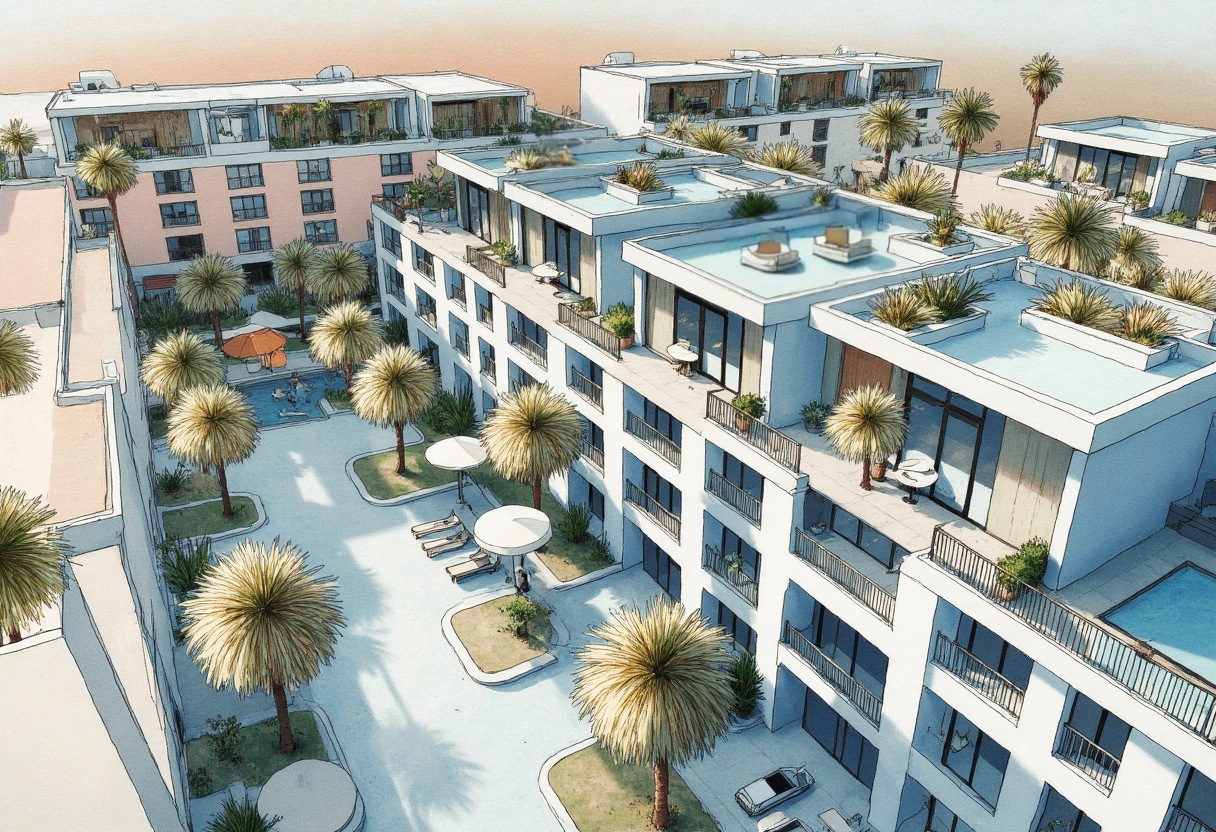
Urban infill development in Florida is undergoing a dramatic transformation, as developers find creative ways to maximize compact sites while delivering luxury amenities. Jerad Graham, Development Principal at Kastelo Development, says this evolution requires rethinking traditional approaches to space utilization.
The Challenge of Urban Sites
“Because it’s an urban infill project and not built out in a neighborhood that’s farther away, it’s a little bit more of a compact site,” Graham explains, describing his firm’s Casa Avenida development. This constraint has pushed his team to innovate in ways that traditional suburban developers haven’t had to consider.
Reimagining Amenity Spaces
Graham’s solution involves careful consideration of how residents actually use outdoor spaces in Florida’s climate. “We created unique architectural features, like covering the parking with the cocktail pools and creating a breezeway that faces east,” he says, explaining how thoughtful design can transform typically unused spaces into premium amenities.
This approach stands in contrast to conventional townhouse developments where pools are often “tucked back in a corner next to a townhouse, where you’re not going to get either as much sunlight or as much of a breeze.”
California Inspiration Meets Florida Reality
Drawing from his West Coast background, Graham is introducing design elements that are common in California but novel to Florida. “I grew up in California… and a lot of the California beach homes have these rooftop decks,” he notes. “Del Rey doesn’t have this. Most of South Florida doesn’t have this.”
However, Graham recognizes that direct transplantation of California design elements won’t work in Florida’s climate. “I also need to have an air conditioned space,” he explains, describing how Casa Avenida incorporates private elevators to make fourth-floor indoor-outdoor spaces both accessible and comfortable year-round.
The Future of Urban Living
This innovative approach to urban infill appears to be resonating with buyers. Graham notes that even at pre-sale launch, the project is “priced below most of the other projects that are under construction or in the pre-sales phase,” while offering unique features not found in competing developments.
Looking ahead, Graham sees significant potential for expansion of this design philosophy. With one project underway and another site under LOI, his firm is demonstrating that creative approaches to urban infill can deliver premium living experiences while working within the constraints of compact urban sites.
Similar Articles
Explore similar articles from Our Team of Experts.



Greenville Land Shortage Forces Upstate South Carolina Developers into Riskier, Longer-Term Projects
Upstate South Carolina’s commercial real estate market is facing a critical shortage of vacant land, according to Maggie Steck, broker in charge at Freedom Commercial. Steck, who has speci...