

A Southern California retail broker argues that national headlines about store closures ignore strong local demand and historically low vacancy rates driven by limited construction and selec...

Tax Revenue from Data Centers Is Staggering, Says Illinois Broker

Written by:
Date:
18 Feb 2026
Share via Facebook

Share via Linkedin

Share via X

Copy to clipboard

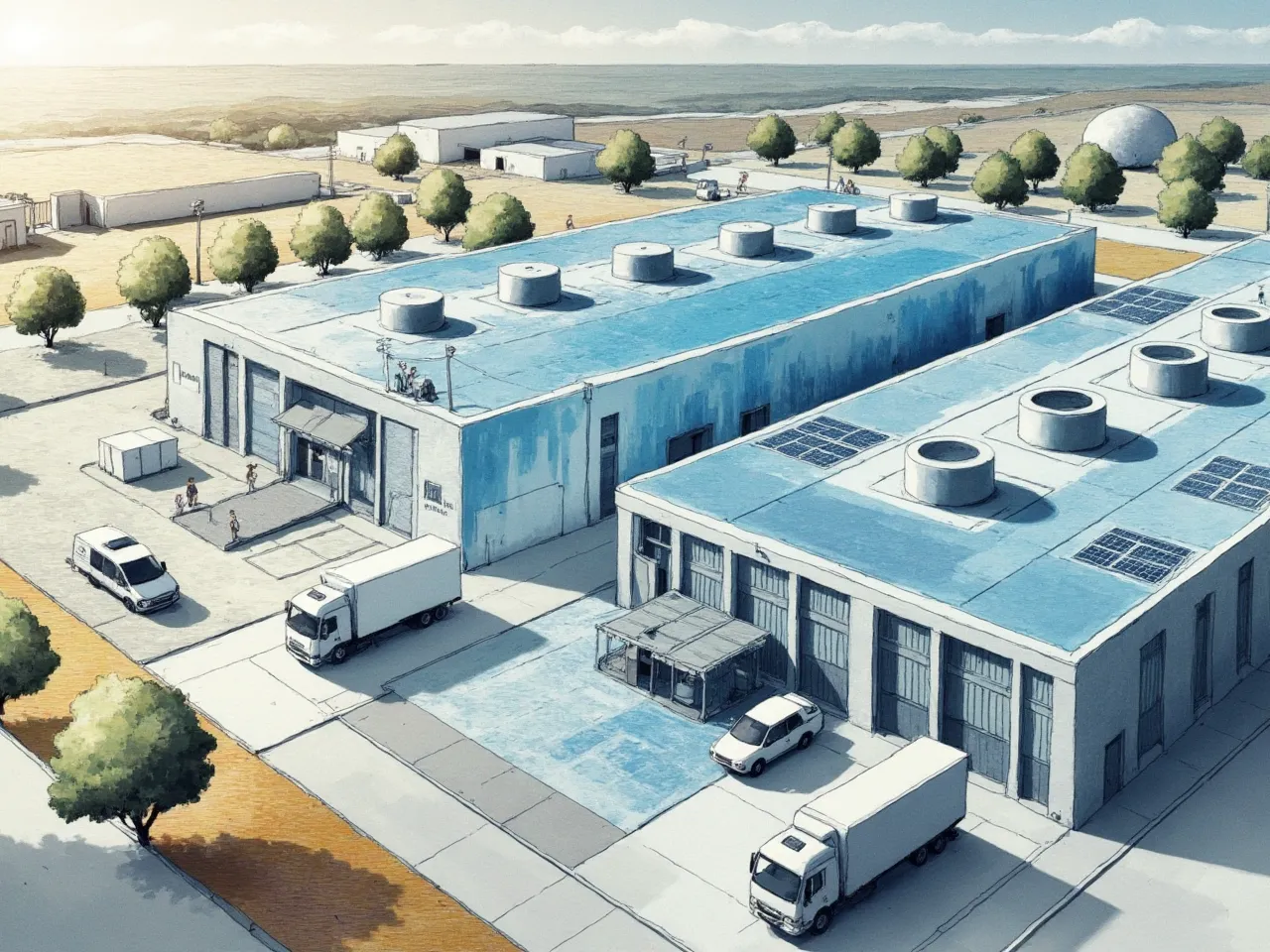
The rapid expansion of artificial intelligence in the United States is driving unprecedented demand for data center infrastructure. Yet in many secondary and tertiary markets, local opposition, often fueled by misunderstandings about data center operations, has become a major barrier to new development.
Steve Zuber, Principal at BARBERMURPHY, says that in much of the Midwest, the main obstacle to data center projects is not a lack of land, power, or water, but public resistance based on misconceptions. “There’s a lot of misinformation about data centers and how they operate, and what they’re going to do to the environment and to a community,” Zuber explains.
Zuber is actively marketing sites in Madison and St. Clair counties in Illinois for data center development. He argues that communities willing to research the realities of existing data centers will find a very different picture than the negative narrative often heard at public meetings.
Economic Benefits Overlooked
Communities that reject data center projects over environmental or social concerns may be missing out on significant economic benefits. Zuber emphasizes the impact on local finances: “The tax revenue that they will receive from these data centers is staggering, and really changes the footprint of a community,” he says.
In addition to tax revenue, Zuber points to job creation and quality. Contrary to claims that data centers provide few local jobs, he notes, “They do have a lot of jobs, and they’re well-paid jobs.” While data centers are not labor-intensive compared to manufacturing, the positions they create, ranging from facility management to security and maintenance, typically pay above-average wages in the region.
Another benefit, Zuber says, is improved digital infrastructure. Hosting data centers locally reduces latency, resulting in faster, more reliable digital services for nearby businesses and residents. For communities increasingly reliant on AI and cloud computing, this technical advantage can improve competitiveness and attract further investment.
Madison County’s Research-Driven Model
Zuber cites Madison County, Illinois, as an example of a proactive approach. Rather than relying on secondhand information or public rumors, county officials have conducted direct research into the impacts of data centers. “Madison County has done a really good job of getting ahead of the narrative and having the government dig into locations where there’s already data centers, and speaking to those communities about the pluses and the negatives,” he says.
By gathering firsthand accounts from areas that already host data centers, Madison County officials have been able to separate fact from speculation. This deliberate outreach, Zuber argues, has put Madison County “ahead of the curve in this region” for attracting new data center investment.
The AI Demand Dilemma
Zuber notes that opposition to data centers is at odds with the public’s growing dependence on AI-powered technology. As adoption of AI accelerates across industries and daily life, the need for data center capacity is only increasing. “If people are so against these data centers, then they need to quit using AI altogether. But I don’t think anybody wants to do that,” Zuber says.
He argues that the debate is not about whether data centers will be built, but where they will be built. Communities that block new facilities are not halting AI’s expansion; they are simply sending investment, jobs, and tax revenue elsewhere. “These data centers are going to continue to grow across the country,” Zuber says, and local decisions determine who benefits.
Similar Articles
Explore similar articles from Our Team of Experts.




Perspectives, Commercial Real Estate, Property Technology, Market Analysis & Policy, Industry News, Top Articles
The explosive growth of artificial intelligence is driving data center developers to consider nuclear power as a solution to their massive energy needs, according to a leading real estate at...