

Just three months ago, Jacksonville homebuyers were scrambling to compete – making rushed offers, paying well above asking price, and agreeing to buy homes “as is” without the usual sa...

Rental Restrictions in Chicago's South Suburbs Are Shutting Out New Investors

Written by:
Date:
08 Sep 2026
Share via Facebook

Share via Linkedin

Share via X

Copy to clipboard

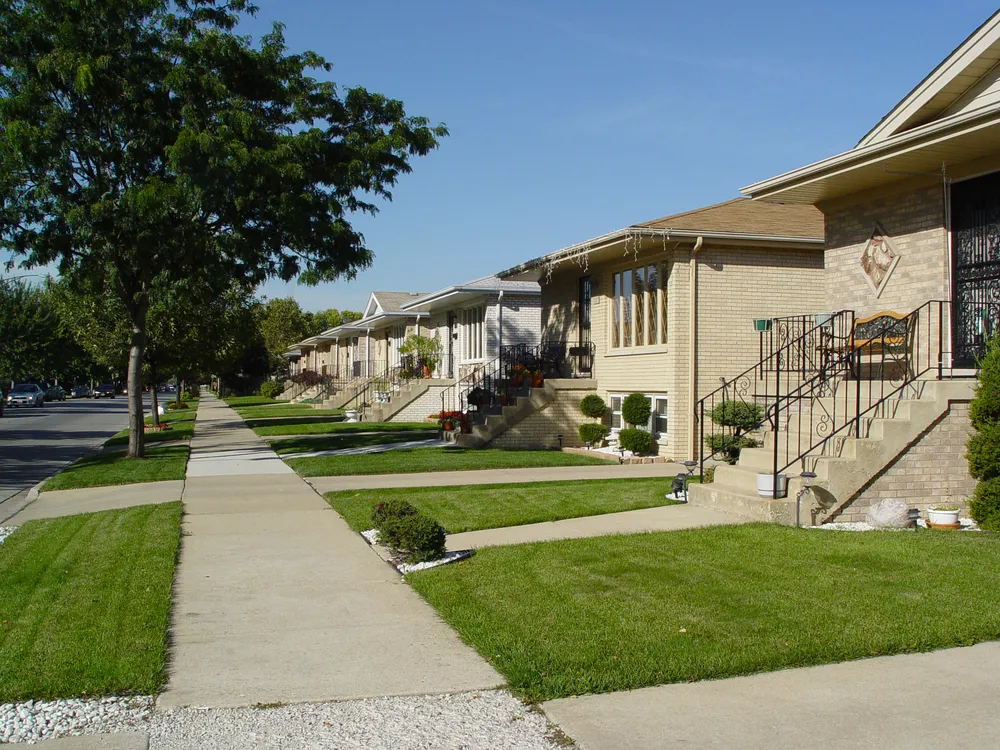
Investors looking at affordable properties in Chicago’s south suburbs are running into an obstacle that does not show up in any listing: several villages have rewritten their rental standards in ways that effectively bar new investors from renting out properties within village limits, according to Aaron Gaines, a Realtor with Keller Williams Preferred Realty who works across roughly ten counties in the Chicago metro.
The restrictions vary village by village, and investors who do not check before buying risk owning a property they cannot legally operate as a rental. That risk is compounding in a market already defined by tight inventory, rising property taxes, and affordability pressure.
A Patchwork of Village-Level Rules
Gaines describes a fragmented policy landscape across the south suburbs. Some villages have tightened licensing requirements. Others have imposed restrictions that specifically target investors who do not already hold rental permits in the community. “They are not allowing new investors to rent properties in their villages,” Gaines says.
The rules are not consistent from one village to the next. A community that welcomes rental investors may sit directly beside one that blocks them. There is no single county-wide or metro-wide standard to follow, and the rules have been changing. Gaines tells investors to “definitely look at the villages and to see what they are allowing” before committing to a purchase.
For an investor whose strategy depends on rental income, a village-level prohibition makes a property nonviable regardless of how favorable the acquisition price looks.
Rising Costs Are Pushing Homeowners Out
The rental restrictions are layered on top of a market where affordability pressure is already acute. Gaines says rising property taxes are forcing some south suburban homeowners to sell before they fall into foreclosure. He describes visiting properties where the owners simply cannot afford the home anymore due to tax increases they were unable to appeal or reduce.
Insurance premiums have also climbed. Combined with HOA costs in some communities, these carrying expenses are a leading reason deals fall apart. Gaines identifies taxes, HOAs, and insurance as the most common factors that kill transactions in his market.
That same cost pressure applies to investors after closing. A property tax bill that pushed the previous owner into distress will land on the new owner’s books at the same assessed amount, and it can turn a cash-flowing rental into a losing one.
Tight Inventory Narrows the Options Further
Chicago remains a seller’s market, and Gaines says it has been one for nearly as long as he has been selling real estate. Inventory is tight across the price spectrum. Buyers at every level are struggling to find properties that meet their criteria. Gaines says he routinely has to help buyers narrow their wish lists to their top three priorities and accept that they may only get one or two of those met.
For investors, this means the pool of properties that are both affordable and located in a village that still permits new rental licenses is shrinking. They are not just competing with other investors but with first-time buyers and families pursuing the same affordable inventory for owner-occupied use.
Block-by-Block Knowledge Is Not Optional
Gaines emphasizes that Chicago’s real estate market resists generalization. The city itself contains 77 distinct communities, and the surrounding suburbs add further complexity. “If people try to broad brush Chicago, they will be hurt in their investing,” he says. What is happening in one neighborhood may bear no resemblance to conditions a few blocks away.
That granularity extends to price appreciation. Gaines notes that a neighborhood like Lincoln Park is up roughly 14% year over year, while Park Forest tells a completely different story. Investors who rely on metro-wide averages rather than block-level data are working with incomplete information.
Gaines points to Harvey as one area where opportunity may be emerging. The village’s administration is changing, which could bring new development energy. But he pairs that with caution: “It’s going to be interesting to see how fast the change moves,” he says. The pace is uncertain, and the village-level policy landscape requires ongoing monitoring.
Where Opportunity Still Exists
Despite the constraints, Gaines says the broader Chicagoland market remains active. Appreciation across the metro has been steady at 3% to 5%, and demand remains consistent. He frames the current environment as one where difficulty and opportunity coexist. “No matter what is going on economically, there’s always going to be difficulty,” Gaines says. “But there’s also always going to be opportunity.”
For investors considering the South suburbs, the practical starting point is the village hall, not the listing sheet. Confirming whether a village currently issues new rental licenses to outside investors is the threshold question that determines whether a deal is worth pursuing at all.
About the Expert: Aaron Gaines is a Realtor with Keller Williams Preferred Realty, working across roughly 10 counties in the Chicago metro area, with a focus on the south suburbs.
This article is intended for informational purposes only and does not constitute legal, financial, or investment advice. The views and opinions expressed herein reflect those of the individuals quoted and do not represent an endorsement of any company, product, or service mentioned. Readers should conduct their own due diligence and consult qualified professionals before making any investment decisions.
Similar Articles
Explore similar articles from Our Team of Experts.