

Homes in South Jersey are no longer selling at the rapid pace seen during the pandemic boom. Properties that once attracted multiple offers in days are now taking weeks to move, with sellers...

Long Island Investors Should Watch Where People Are Leaving, Not Arriving

Written by:
Date:
03 Sep 2026
Share via Facebook

Share via Linkedin

Share via X

Copy to clipboard

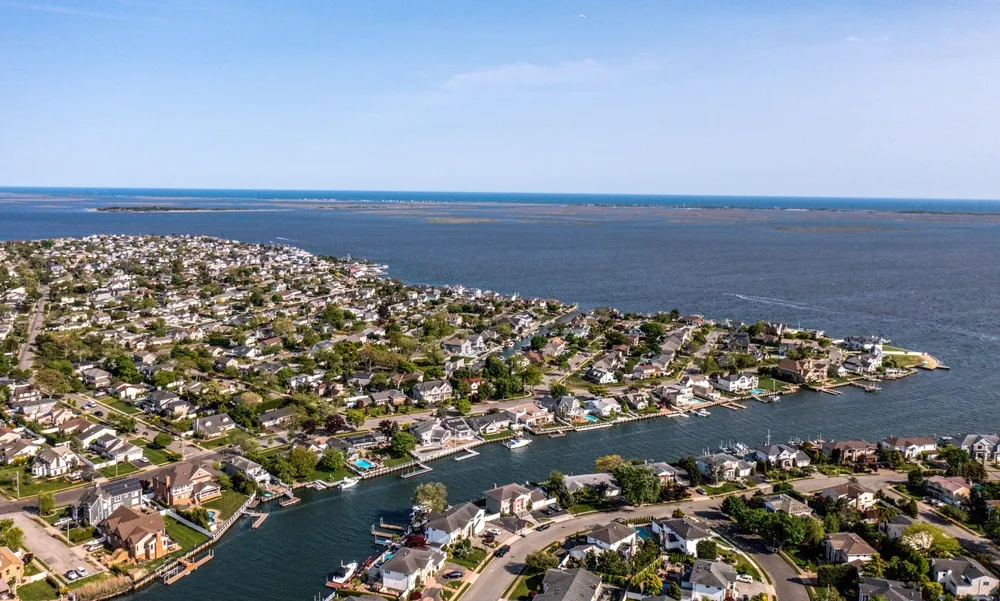
The instinct for most real estate investors is to follow the crowd, buy where population is growing, where demand is rising, where prices are climbing. On Long Island, that instinct may be exactly wrong. The areas gaining residents have already priced in the demand, while areas losing population may offer entry points that generate better returns, according to Joe Moshe, founder and broker/owner of Charles Rutenberg Realty, Inc., a brokerage with nearly 600 agents covering the New York tri-state area.
Moshe describes Long Island’s current investment landscape bluntly: “I call it a sloppy market because there’s so much going on there.” Investors chasing rentals, investors speculating on appreciation, first-time buyers competing against cash offers, all layered on top of each other in a market where pricing has outrun what many residents can afford.
The Crowded Trade is Losing Steam
Investor activity on Long Island surged in recent years as rental demand from younger residents who couldn’t afford to buy created a clear income opportunity. But Moshe observes that the cycle is reaching its natural limit: “I think that investor program is slowing down a little bit because the prices have increased so much.”
When purchase prices rise faster than rents can follow, yields compress. An investor buying at today’s elevated Long Island prices faces thinner returns than one who bought several years ago. The trade that worked at lower entry points becomes marginal at current levels.
This doesn’t mean Long Island is a bad investment market. It means the obvious plays, buying in desirable, growing areas and renting to people priced out of ownership, have gotten crowded and expensive.
The Case for Areas Losing Population
Moshe’s advice to investors considering the region runs against conventional wisdom. Rather than chasing areas where population is growing, he suggests looking at where people are leaving: “If an area is losing population, prices are going to go down if the population doesn’t fill in.” That’s where entry prices become attractive.
Long Island has experienced outmigration as residents relocate to lower-cost states. Moshe names Florida, Arizona, Tennessee, North Carolina, South Carolina, and Virginia as common destinations, driven largely by taxes and congestion. The areas they leave behind still have housing stock, infrastructure, and proximity to New York City employment centers.
Moshe emphasizes that the research has to be specific. He advises investors to look at what individual towns and counties are planning, permits, development proposals, growth strategies, and to study demographic movement patterns. “I would have them research various different towns and counties to see what their plans are for their community,” he says. An area losing population but attracting new development is a different proposition than one losing population with no replacement demand in sight.
Why Prices Aren’t Likely to Collapse
Even in weakening areas, Moshe doesn’t expect dramatic price declines. He points to broader cost pressures, wages, oil, food, materials, as creating a floor under housing prices. “It’s very difficult to see any of these prices reduce significantly,” he says. “Everything is up.”
He does expect the seller’s market to loosen over the next few years as baby boomers begin selling homes they’ve held for decades. Two forces are pushing them: aging out of multi-story homes they no longer need, and adult children who need housing but can’t afford to buy on the open market. “I see the baby boomer market really coming into effect in the next couple of years,” Moshe says.
That additional inventory won’t necessarily crater prices, but it could create the kind of buying opportunities that haven’t existed on Long Island during the prolonged seller’s market. For investors, the combination of selective depopulation in some communities and eventual boomer-driven inventory increases could produce entry points below current peak pricing, particularly in areas where local governments are actively planning for growth.
Manhattan and the boroughs still attract foreign capital and corporate demand, which keeps those prices elevated. Long Island’s opportunity, in Moshe’s framing, is different: it depends on identifying specific communities where current outflows are temporary and where local planning signals a recovery thesis.
About the Expert: Joe Moshe is founder and broker/owner of Charles Rutenberg Realty, a brokerage covering the New York tri-state area.
This article is intended for informational purposes only and does not constitute legal, financial, or investment advice. The views and opinions expressed herein reflect those of the individuals quoted and do not represent an endorsement of any company, product, or service mentioned. Readers should conduct their own due diligence and consult qualified professionals before making any investment decisions.
Similar Articles
Explore similar articles from Our Team of Experts.