Press release – Neuilly-sur-Seine, October 8, 2024 – 8.00 am ARGAN sold to Invesco Real Estate its datacentre located in Wissous and thus successfully finalizedits assets sales program f...

Measuring Community Success by Life Per Square Foot, Says Developer

Written by:
Date:
06 Oct 2025
Share via Facebook

Share via Linkedin

Share via X

Copy to clipboard

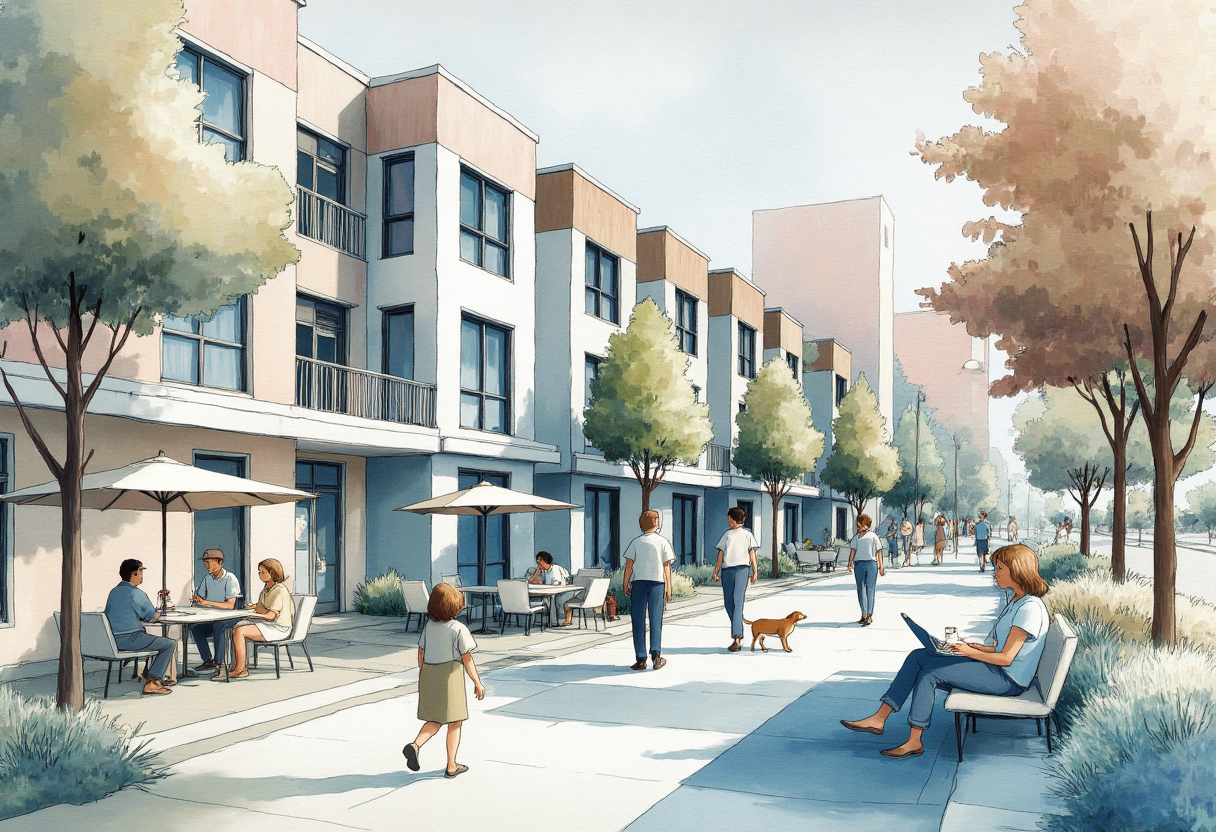
A Texas developer is challenging traditional measures of master-planned community success, arguing that human-centric metrics may be better indicators of long-term value than conventional financial benchmarks.
“Traditional developers measure by price per front foot, average sales price, or absorption rates,” says Mike Miller, Executive Vice President of Real Estate at Red Oak Development Group. “We want to measure things like happiness indices and life per square foot, how many parks or community get-togethers our community curates.”
Redefining Success Metrics
Miller’s approach represents a significant departure from industry standards that typically focus solely on financial performance. “If we concentrate on the human metrics, then we feel like the profitability metrics will follow,” he explains, suggesting that community engagement and resident satisfaction ultimately drive sustainable financial success.
This philosophy shapes how Red Oak designs its communities, particularly their approach to commercial integration. Rather than relegating retail to the periphery, Miller says they “bring our commercial into the community as part of an amenity for our residents. We truly vision out the community as a whole.”
The Work-From-Home Impact
Miller points to evolving work patterns as validation of their community-centric approach. “Work From Home, as much as some big companies hate it, it’s here to stay,” he observes. “Those third places become important for people, either to get away from the home where they have kids or just have that community connection because they’re not at the office.”
This trend has influenced Red Oak’s development strategy, particularly in their mixed-use centers. “We are planning for live-work units, for entrepreneurs to be able to have a business on the bottom floor and live above,” Miller explains. “We’re planning for that coffee third place co-work type spot that people desire to have walkability to get to.”
The Live-Work Revolution
Miller sees particular potential in live-work spaces, calling them “a whole asset class that is yet to be uncovered.” He points to successful examples like Wheeler district in Norman, Oklahoma, suggesting that the ability to purchase these units with traditional home mortgages makes them particularly attractive to local entrepreneurs.
“If I were a local entrepreneur… it would be gold to have that many customers right outside my space,” Miller says. “And then I’ve just got to walk downstairs to get to work that day.”
Similar Articles
Explore similar articles from Our Team of Experts.

Courted’s Agent Recruiting Platform Recognized for Company of the Year and Most Innovative Use of AI
Courted Courted has rapidly emerged as a leader in the real estate tech space, leveraging cutting-edge AI technology to deliver unparalleled agent recruiting solutions. As such a young co...