

While most California markets have slowed in the past year, with homes lingering on the market and sellers dropping prices, Coronado stands out as an exception. This small beach town across ...

Jersey City's Condo Supply Is Tighter Than It Looks – and Manhattan's Shortage Is Making It Worse
Share via Facebook

Share via Linkedin

Share via X

Copy to clipboard

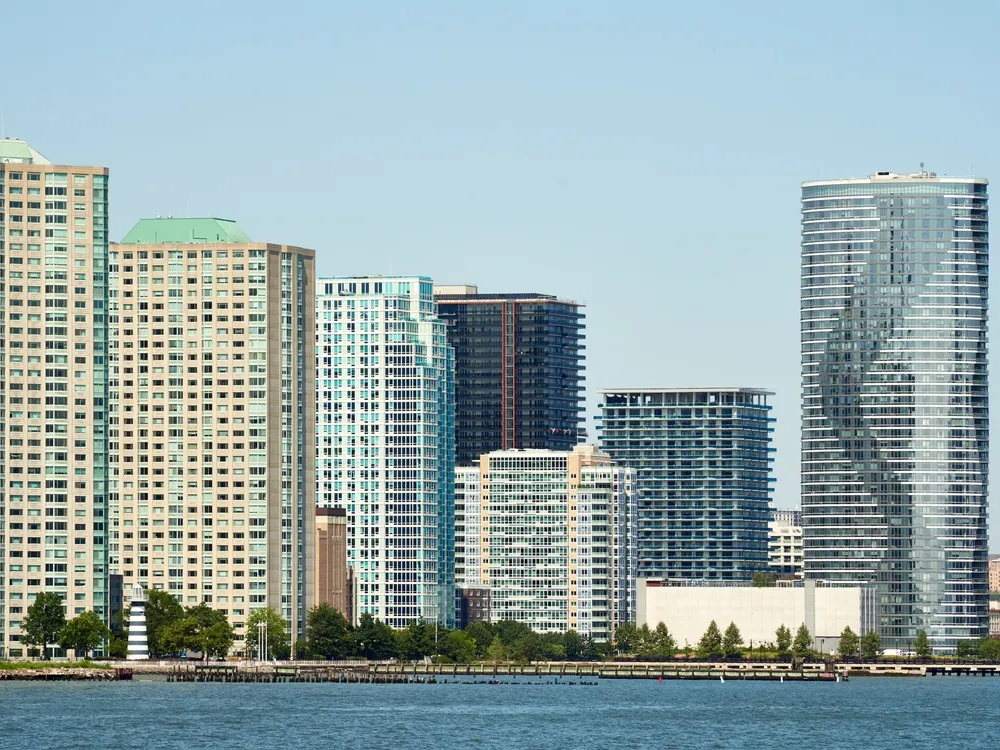
Jersey City’s downtown condo market reports a three-month absorption rate, but according to Patrick Southern, Team Leader at SERHANT (Properties by Southern), roughly one-third of that inventory cannot compete with new construction – leaving an effective supply closer to two months for buyers seeking quality units.
The Three-Month Number Overstates What’s Available
A three-month absorption rate means that if no new listings entered the market, all available condos would sell within 90 days. Southern argues that figure obscures what buyers actually encounter. He estimates one-third of current inventory consists of units with bad layouts, low ceilings, deferred renovations, obstructed views, or overpricing – properties that do not compete meaningfully with new construction.
“If you really identify what that product is, it’s not a pure three months,” Southern says, “because let’s say one third of that is just trouble property – bad layout, low ceilings, need a big renovation, transformer out the window, something an eyesore across the block, overpriced.”
Strip those units out, and the competitive supply drops to approximately two months. For developers underwriting new projects, that distinction separates a healthy market from one where new construction can absorb quickly and support price increases during the sales process.
Manhattan and Brooklyn Are Pushing Buyers Across the Hudson
The supply tightness does not exist in isolation. Southern says Manhattan and Brooklyn currently have their lowest levels of new construction inventory in 15 years. That scarcity is pushing buyers who might otherwise have stayed in New York to look across the river.
The pattern of that migration has also changed. For years, buyers relocated from Manhattan to Brooklyn first, then eventually crossed into Hudson County. During COVID, Southern says, buyers began skipping Brooklyn entirely.
“We saw for the first time some real money came over,” Southern says. “A couple living in a condo during COVID that was worth five or six million in Manhattan would come over to Jersey City, buy an incredible brownstone for two and a half million dollars, and then go down to Spring Lake and buy a beach house for three and a half million dollars.”
Southern says that direct transfer of capital from Manhattan to Jersey City has continued as New York inventory has tightened further.
What Two Months of Supply Means for Pricing
Southern says waterfront product in Jersey City currently blends at approximately $1,500 per square foot at the top end – a figure that would be unremarkable in Brooklyn but represents a premium for Jersey City. Pricing cascades westward from the waterfront as distance from transit and views increases, creating distinct price pockets for different buyer segments.
The affordability gap with New York remains wide. Southern notes that spending $5 million on a single property in Jersey City is genuinely difficult – a ceiling that surprises buyers arriving from Manhattan. That gap, combined with the two-month effective supply, creates conditions where new construction can command premium pricing without the extended absorption periods that plague oversupplied markets.
Southern says the rental-heavy development cycle from roughly 2013 through 2019 inadvertently set up the current condo shortage. Developers built large amounts of rental product during that period, leaving the for-sale market relatively underdeveloped. Buyers who arrived during and after COVID found limited quality options, and that imbalance has not yet been corrected.
How the Supply Picture Shapes Development Strategy
Southern’s team recently sold out a 50-unit project at 139 Christopher Columbus in Jersey City in 11 weeks with five price increases – a result he attributes to reading the supply environment correctly and calibrating unit mix and pricing before construction began.
Southern describes a development process where the sales strategy starts years before the first unit reaches market. His team works with developers on unit optimization – the mix of studios, one-bedrooms, two-bedrooms, and three-bedrooms – and on target gross pricing per unit, backing into size and efficiency to hit price points buyers will absorb. He frames this as particularly important in a supply-constrained market where mispricing means leaving money on the table rather than sitting on unsold inventory.
His partnership with Ryan Serhant’s organization gives his team access to analytics, architectural resources, and marketing infrastructure needed to pursue larger projects in the 150- to 300-unit range. Southern says those larger buildings represent a new product type for Jersey City – towers that have existed in Manhattan and Brooklyn for years but are only now emerging in Hudson County as the market matures enough to support them.
For buyers considering Jersey City condos, the practical implication is that waiting for supply to loosen may not produce better options in the near term. The rental-to-condo pipeline takes years to develop, and New Jersey’s regulatory requirements around condo validation add additional lead time before new projects can even begin marketing.
About the Expert: Patrick Southern is Team Leader at SERHANT, who has sold real estate in Jersey City, New Jersey, since 2003.
This article is intended for informational purposes only and does not constitute legal, financial, or investment advice. The views and opinions expressed herein reflect those of the individuals quoted and do not represent an endorsement of any company, product, or service mentioned. Readers should conduct their own due diligence and consult qualified professionals before making any investment decisions.
Similar Articles
Explore similar articles from Our Team of Experts.