

In high-demand suburbs including Naperville and Aurora, Illinois, more buyers are walking away from deals after winning bidding wars. The cause is not inspection or financing issues, but imm...

Investor Frenzy Reshapes South Florida as the $250K Entry Point Disappears

Written by:
Date:
26 Oct 2025
Share via Facebook

Share via Linkedin

Share via X

Copy to clipboard

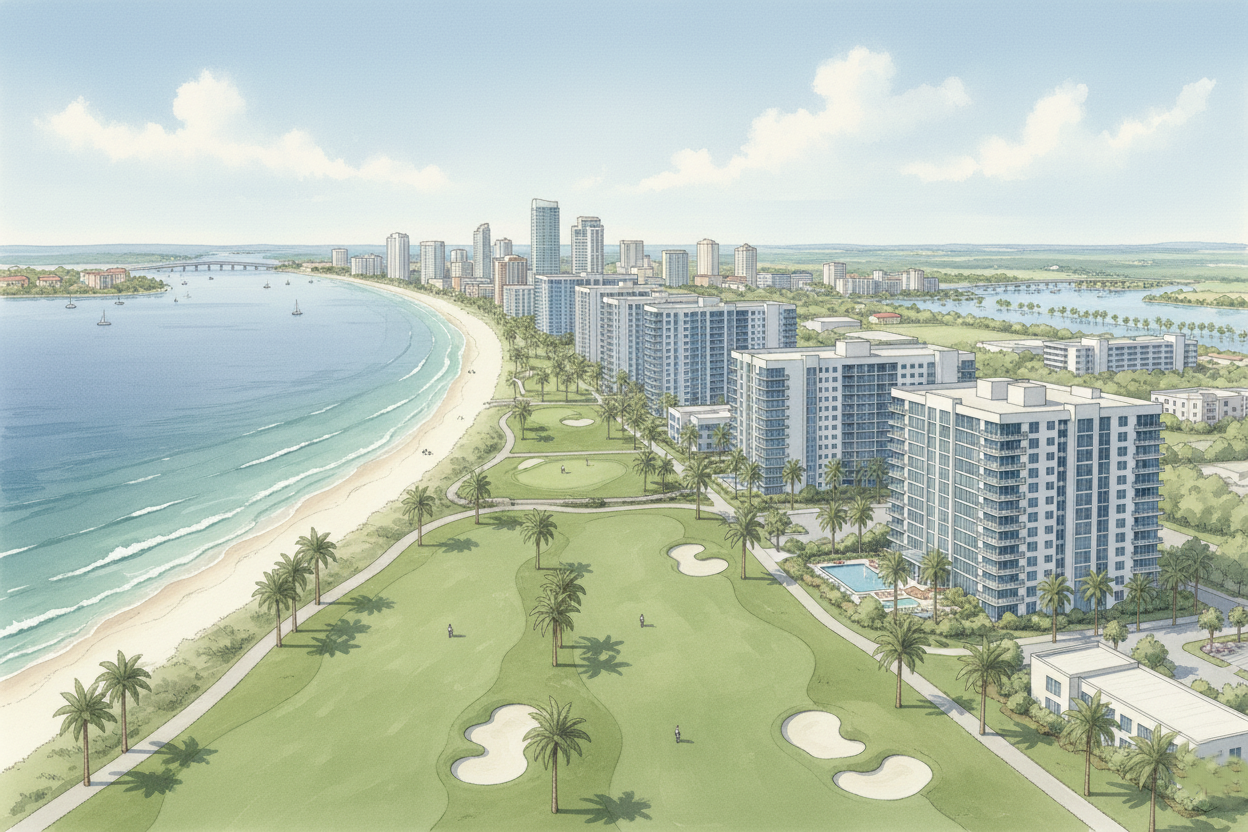
South Florida’s investment property market is seeing a surge in investor activity, but the traditional entry points that once made the market accessible have largely vanished, according to Denise Madan of EXP Realty. With 25 years in the business, Madan notes a significant change in investor behavior and market dynamics that is transforming real estate investment in the region.
“Investors have come out of the woodwork. I get text messages every single day from investors,” Madan said, describing a sharp rise in inquiries in recent months. The volume has grown so much that she has had to implement screening criteria to manage it.
This uptick marks a shift from past patterns, where investors typically operated within established networks. Now, Madan receives daily outreach from investors seeking opportunities, many of whom have no prior relationship with her or her team.
One of the most notable changes Madan identifies is the loss of the investor “sweet spot”—properties around $250,000 that used to offer favorable risk-adjusted returns for fix-and-flip projects.
“The sweet spot was around $250,000, so most investors $250,000 maybe $300,000. You just don’t find those properties anymore, and if you do, they’re totally destroyed,” Madan said. As a result, investors have had to rethink their strategies and increase their capital outlays.
The lack of sub-$300,000 investment options has created a ripple effect. Investors who once operated in the quarter-million-dollar range are now competing for higher-priced properties, which squeezes potential returns and raises the financial barrier to entry.
Rising prices have forced investors to look beyond their traditional neighborhoods. Madan observes that Miami-based investors, who once preferred familiar areas with known contractor networks, are now moving into Broward County, Palm Beach County, Central Florida, and even the west coast of Florida.
“If they’re going to find a deal to turn around to make some money, they have to keep coming north. They have to come to Broward, they have to go to Palm Beach County. They have to go to Central Florida, or they even have to go to the west coast of Florida,” she said.
This broader reach brings new operational challenges as investors must establish contractor relationships, learn different municipal requirements, and adapt to unfamiliar markets. The added complexity can reduce efficiency and affect profitability.
In addition to traditional fix-and-flip investors, Madan has seen a rise in wholesaling, especially among younger entrants. “Even the younger people are trying to get in, and people are trying to get in, and they’re trying to do wholesaling deals,” she noted.
Wholesaling appeals to those seeking a way into the market without the larger capital requirements of fix-and-flip projects. It allows participants to profit from market inefficiencies with less upfront risk.
Despite the increased investor activity, Madan emphasizes a relationship-driven approach. “I’m very transparent. Why am I going to think about selling a property to you when I have my own list of investors that want properties? I’m going to go to my list first,” she said.
In a market with limited inventory at attractive prices, established relationships give agents and investors a significant edge.
The surge in investor interest is expected to continue, fueled by South Florida’s appeal as a warm-weather destination and ongoing population growth. However, with rising prices and fewer accessible properties, successful investing will require more capital and greater operational expertise than in the past.
Similar Articles
Explore similar articles from Our Team of Experts.



Greenville Land Shortage Forces Upstate South Carolina Developers into Riskier, Longer-Term Projects
Upstate South Carolina’s commercial real estate market is facing a critical shortage of vacant land, according to Maggie Steck, broker in charge at Freedom Commercial. Steck, who has speci...