

The home renovation industry is experiencing a notable shift as artificial intelligence tools gain mainstream acceptance among consumers, changing how homeowners approach major remodeling pr...

Chicago's West Side Is Drawing Multi-Unit Investment Away From the South Side

Written by:
Date:
08 Sep 2026
Share via Facebook

Share via Linkedin

Share via X

Copy to clipboard

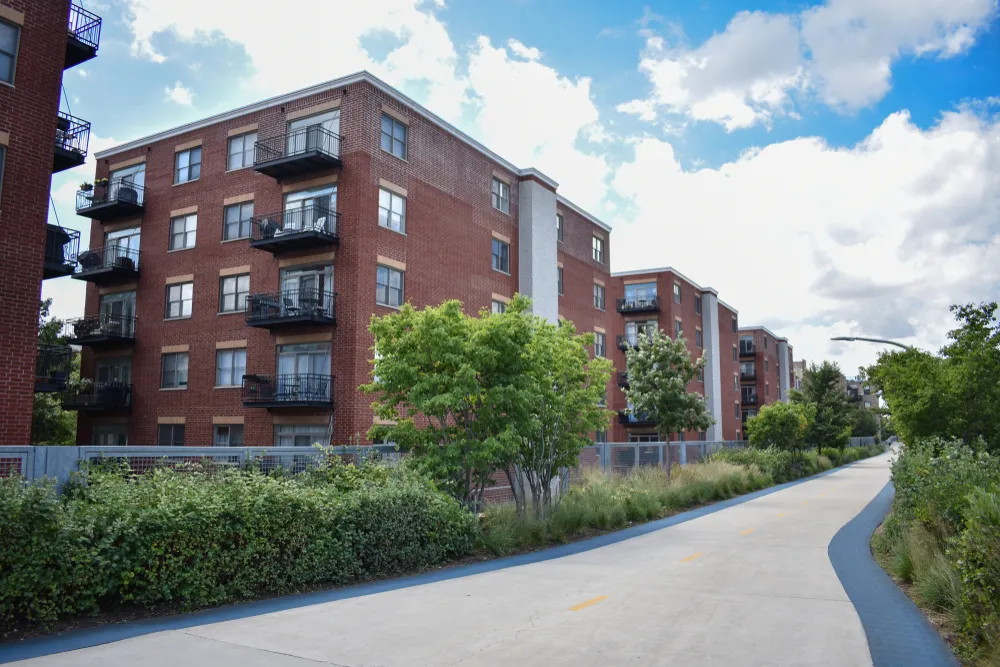
For the past several years, Chicago’s South Side dominated new construction activity in the city’s multi-unit investment market. That momentum is now shifting west, and the catalyst is a single infrastructure project large enough to redirect capital flows across the city.
The 1901 Project, a multi-year, $7 billion development planned around the United Center on Chicago’s west side, is pulling investor attention away from south side neighborhoods where inventory has begun to outpace demand, according to Lawrence Dunning, a broker with The Dunning Team at Fulton Grace Realty in Chicago. For out-of-state investors already drawn to the Midwest for its cap rates, the west side offers both current yield and a capital appreciation case built on incoming infrastructure spending.
Dunning says investors from California, Florida, and New York are calling specifically about inventory near the 1901 Project. “They’re expecting with all the development, all the money being put in, that the area is going to appreciate,” he says. “So not only do you get good cap rates today, but you get good capital appreciation over the coming few years.”
Why the South Side Peaked
Chicago’s south side attracted heavy new construction investment over the past few years, aided by large-scale projects like the Obama Museum. The pattern was self-reinforcing: capital attracted more capital, and investor demand followed deployment.
That cycle has limits. Dunning says the south side’s inventory is now starting to outpace demand, particularly with higher interest rates suppressing some buyer activity. The combination of oversupply in specific corridors and elevated borrowing costs has created friction that did not exist two years ago.
The west side, by contrast, has very little new multi-unit inventory near the 1901 Project site. Dunning listed a new construction building three months from completion near the area and received multiple offers, going under contract before drywall was installed. “That just shows that the investor demand is there in the areas where there’s not too much inventory,” he says.
For investors weighing where to deploy capital in Chicago, the distinction matters: south side corridors now carry inventory risk that did not exist during the construction boom, while west side locations near the 1901 Project offer scarcity alongside a clear infrastructure catalyst.
The Buyer-Seller Expectation Gap
Across Chicago’s multi-unit market more broadly, a disconnect between buyers and sellers is slowing transactions in areas with heavier inventory. The tension is structural: builders face construction costs that have risen with inflation, while buyers face higher interest rate costs and want price concessions to compensate.
“It’s a bit of a gap in expectations right now between buyers and sellers, and that’s where we’re seeing in certain areas where there’s a lot of inventory, some of it sitting there because buyers and sellers can’t seem to agree on value,” Dunning says.
The deals that are closing tend to involve investors who take a longer view. The operating thesis: buy at today’s cap rate, plan to refinance within 9 to 15 months as rates decline, and accept temporarily compressed cash flow in exchange for equity upside. Dunning frames this in familiar terms: “you marry the building, but you’re only dating the interest rate.”
Cap rates remain the primary evaluation tool for these investors precisely because they strip out interest rate fluctuations. A new construction three-unit on a standard Chicago lot with standard multi-unit zoning typically trades at a 7.5 to 8.5 percent cap rate, a range Dunning says works for both the end buyer and the developer.
What’s Driving National Capital to Chicago
The Midwest investment thesis rests on a specific combination: historically low prices relative to coastal markets, strong cap rates, and rent growth that Dunning describes as among the fastest in the country. Near the Illinois Medical District around Mount Sinai Hospital, he reports roughly 10 percent price appreciation over the past 12 months, supported by a built-in tenant base of hospital workers who ensure consistent occupancy.
Dunning, who moved from London to Chicago to run a trading company before spending 20 years investing in real estate, says he is currently adding a new construction multi-unit to his own portfolio, a decision that reflects the same logic he presents to clients. “If you have a place with historically low cap rates, which is what the Midwest is, historically cheap compared to other areas of the U.S., plus you combine that with the fastest rent growth in the country, that for me seems like a good place to invest,” he says.
The Macro Headwind and Who Is Still Buying
Higher interest rates have slowed the broader multi-unit market across the country, and Chicago is not immune. Dunning acknowledges that investors now have alternatives; risk-free Treasury bonds yielding around 5 percent compete directly with leveraged real estate returns.
But Dunning says the buyers still active in the market believe the current rate environment is temporary. He describes their outlook as driven by a view that the economy is moving in a deflationary, technology-driven direction, and that short-term inflationary pressures like elevated oil prices will not persist. These investors are underwriting a refinance within 9 to 15 months, not locking in today’s rate as permanent.
The result is a market where sophisticated investors continue to buy while less experienced buyers hesitate, widening the gap between those who act on cap rate fundamentals and those who focus on current borrowing costs. For buyers waiting for rates to fall before entering, Dunning’s view is direct: by the time rates decline, competition for available inventory will intensify, and the pricing advantage of buying in a slower market will have disappeared.
About the Expert: Lawrence Dunning is a broker with The Dunning Team at Fulton Grace Realty in Chicago, with 20 years of experience investing in real estate.
This article is based on information provided by the expert source cited above. It is intended for general informational purposes only and does not constitute legal, financial, or real estate advice. Readers should conduct their own research and consult qualified professionals before making any real estate or financial decisions.
Similar Articles
Explore similar articles from Our Team of Experts.