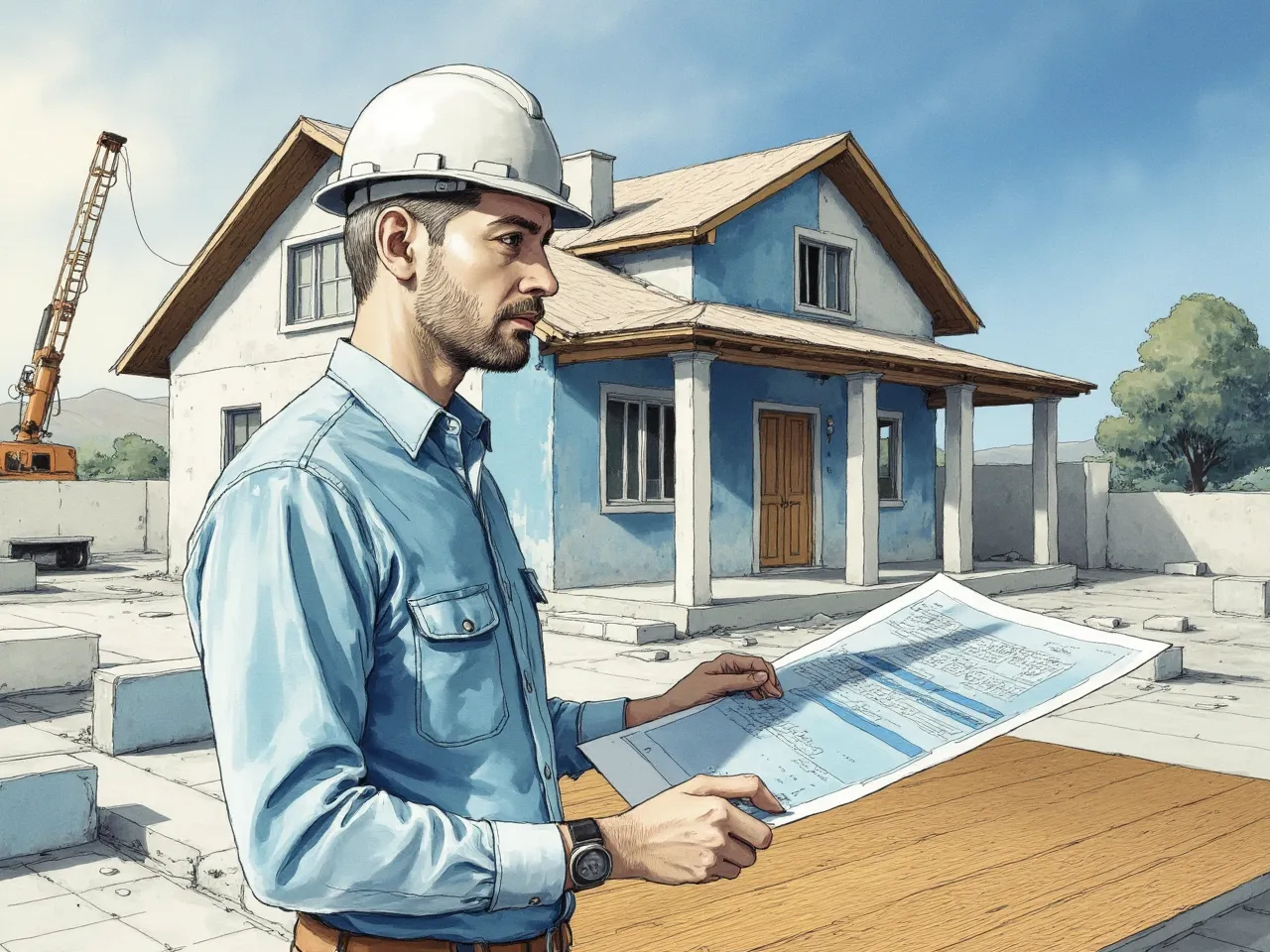
The economics of new construction in Bergen County have shifted significantly, making it viable only at much higher price points than in the past. This change has significant implications for the area’s ongoing inventory shortage, as new homes are built exclusively for the wealthiest buyers, leaving most demand unmet.
Sergio Sciortino, broker associate with Keller Williams Village Square Realty, says the cost structure that once made new development attractive is no longer in play. “You have to buy an existing house, and you’re going to pay about a million dollars, probably, if you can find it,” Sciortino says. “And then you have to build it for $3 million plus to make money, because the construction costs have gone through the roof, also because of COVID.”
Both land and construction costs have surged, channeling new development into a narrow high-end segment and doing little to alleviate the broader housing shortage.
The Land Acquisition Bottleneck
A central factor in Bergen County’s new-construction economics is the scarcity of available land. Sciortino notes that there are almost no vacant lots left in towns such as Wyckoff. “There’s just not a good amount of new construction in Wyckoff because there are no empty lots,” he says.
As a result, developers must buy existing homes, demolish them, and build new ones. The cost of these so-called “knockdown” properties has climbed sharply. Sciortino notes that lots suitable for redevelopment now sell for approximately $1 million, compared with the $800,000 range before the pandemic.
“I have people who are looking for a proper-size lot; they’ll pay up to a million, then knock it down and build,” Sciortino says. “And that build is probably going to cost you, you know, north of a million, a million and a half, up higher than that, depending on your finishes.”
A developer who spends $1 million on a lot and another $1 to $1.5 million on construction incurs total costs of at least $2 to $2.5 million before any profit. In practice, Sciortino says, finished homes need to be priced at $3 million or more to make the numbers work.
Why Construction Costs Are Higher
Several forces have driven up construction costs. Material prices increased during the pandemic and remain elevated. Labor is more expensive due to ongoing shortages in the construction workforce. Buyers expect higher-end finishes and more advanced systems, thereby increasing costs.
“Appetite for new construction is there and healthy, but it’s got to be at, you know, everything has to be at a certain price point of what they’re looking for it to match,” Sciortino says. Buyers will pay a premium for new construction, but only if the home delivers top-tier finishes, modern systems, and quality design.
This dynamic leaves developers with little room to cut costs. To achieve the $3 million-plus price required for a viable project, the home must deliver on every detail. Any attempt to value-engineer or downgrade finishes risks undermining the home’s marketability and price.
A Riskier Business for Builders
The higher costs and price points have also changed the risk profile for developers. “You have to be a very experienced builder, because your costs are much higher and it’s much riskier, right, because your new construction is going to be $3 million north of $3 million, so you’re putting a lot out there,” Sciortino says.
Builders now face greater downside risk if the market softens over the 18 to 24 months required to complete a project. The needed capital is greater, and a shift in market conditions could quickly turn a promising project into a financial problem. Developers are betting on stability during a period when mortgage rates and buyer demand can change rapidly.
This risk is exacerbated by the “rate lock” effect, which has kept inventory tight throughout Bergen County. New homes compete with existing properties, in which sellers may have greater flexibility in price or terms. With mortgage rates still elevated, the pool of buyers able to spend $3 million or more is smaller than in previous cycles, which can lengthen the time to sell and increase carrying costs.
Why New Construction Won’t Fix the Inventory Shortage
The most important consequence of these new economics is that new construction cannot solve the county’s inventory shortage. At current land and construction costs, developers can justify building homes priced at $3 million or more, a price far above what most buyers can afford.
Sciortino notes that demand is strongest at lower price points, where new construction isn’t financially possible. Pandemic-era migration has pushed prices higher across all segments, but new supply is being created only at the top. “A lot of people are living down there full-time, a tremendously high number compared to what was before. And that’s what caused those numbers, home prices to spike,” he says.
This leaves buyers seeking homes in the $1.5 to $2.5 million range with few, if any, new-construction options. Instead, they compete for existing homes in a market where sellers are hesitant to list because of locked-in low mortgage rates, thereby reinforcing the inventory crunch.
As a result, Bergen County remains stuck in a cycle where strong demand and high prices persist, but new construction is not a practical solution for most buyers. The economics do not work at the price points at which most demand occurs.
What Developers Can Do Now
For those still building in Bergen County or nearby areas such as Franklin Lakes, Sciortino’s experience indicates the need for careful planning. Projects must be aimed at the high-end market, with finishes and features that justify premium pricing. Builders should expect a longer marketing timeline and be prepared for a smaller pool of buyers. Financial models must account for the possibility that market conditions may shift before a home is sold.
Whether alternative building models, such as modular construction, simplified finishes, or smaller homes, can reduce costs sufficiently to create supply at lower price points remains uncertain. Sciortino is skeptical, noting that with land alone costing $1 million, it is challenging to deliver a finished home below the $3 million threshold and still make a profit.
Looking ahead, the economics of new construction in Bergen County seem likely to keep new supply restricted to the top of the market. Unless land or building costs decline substantially, most buyers will continue to rely on existing homes, and the inventory shortage will persist. For now, new construction is a solution only for those who can afford a premium.
Marketing leader explains why national approaches fail in real estate’s hyper-local digital landscape . The assumption that digital house-hunting behavior is consistent across markets ...
Finding land in Pinal County and envisioning a new subdivision, data center, or solar farm is only the beginning. Many first-time developers expect a simple process: submit plans, get approv...
A new trend is emerging as East Coast boat owners realize they can purchase weekend homes on Fort Myers Beach for less than their monthly marina fees, creating an opportunity that is changin...
Pawleys Island and Murrells Inlet sit just a few miles apart on the South Carolina coast, but buyers and sellers treating them as interchangeable in mid-2026 are working from the wrong map. ...
Ontario’s real estate market is approaching a mortgage reset crisis that will be more severe than what is unfolding in the United States, according to Sebastian Jania, co-founder of On...
Victoria’s resale condominium market is divided between steady demand for entry-level units and slower sales at higher price points, according to Tony Joe, Team Leader and Broker-Owner of ...