

Kansas City’s real estate market is seeing an early surge in activity, fueled by improved interest rates and years of pent-up demand. At the center of this momentum is Brian Dieffenbach, w...

In West Austin, Pricing at Market Value May Already Be Overpricing

Written by:
Date:
04 Sep 2026
Share via Facebook

Share via Linkedin

Share via X

Copy to clipboard

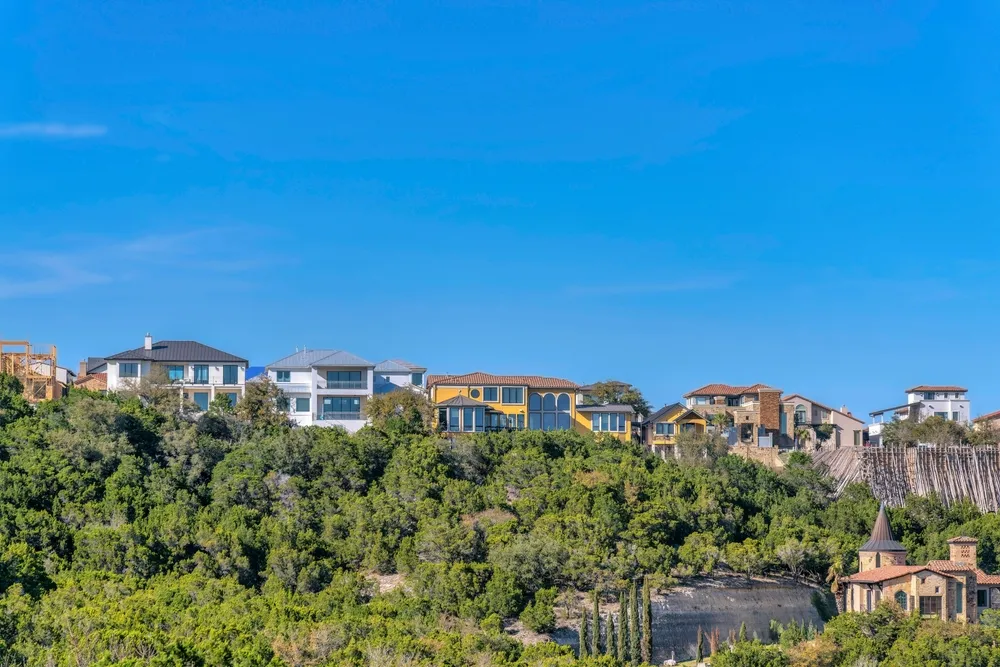
For most sellers, pricing a home “at market value” sounds like the responsible move. Pull comps, match the range, list. But in parts of West Austin right now, pricing at market value is functionally the same as overpricing, and sellers who want to move their homes in a reasonable timeframe need to list below it.
Cynthia Mattiza, a Real Estate Advisor with Kuper Sotheby’s International Realty who focuses on Bee Cave, Lakeway, Westlake, and Spicewood, describes a split outcome she saw this summer. She took a listing in the Bee Cave area where the sellers agreed to price about five percent below market value. The result: a contract within the first weekend. In the same neighborhood, another listing priced closer to what the comps suggested has sat for nearly two months without a serious offer.
That is the gap. Not months of gradual softening, but an immediate, binary outcome: move fast or sit.
Why “Fair” Now Reads as “High”
West Austin has been carrying elevated inventory, and buyers have options. When a buyer can choose from several comparable properties in the same community, any listing that does not stand out on price becomes one they pass over first. “Buyers are way too savvy these days to contract on something that in their mind is overpriced,” Mattiza says.
In the current environment, a home listed right at what recent comps support may still read as overpriced to a buyer who knows similar homes are sitting unsold nearby. The buyer’s frame of reference is not just what sold last quarter – it is what is available right now, with no urgency to act.
This dynamic trips up sellers who purchased in 2021 or 2022 at or near peak prices. Mattiza says these sellers are feeling both the emotional and financial repercussions of those purchases when it comes time to list. Their anchor is what they paid, not what the current market will bear. And the current market, in many West Austin neighborhoods, will not bear full recovery to peak pricing.
The Concession Sellers Are Not Expecting
Competitive pricing now means giving up ground before negotiation even begins. Mattiza puts it plainly: “Priced well might mean a little under market value.” That five percent below comps is not a negotiating cushion offered to the buyer; it is the cost of drawing attention in a market with choices.
This is difficult for sellers in the $1.1 to $1.2 million average range that West Austin commands. Five percent below on a $1.2 million home is $60,000 less than what comps suggest. For sellers who bought near the market’s peak, that gap may be the difference between breaking even and taking a loss.
The risk of not conceding, however, may be worse. A listing that sits for two months accumulates days on market that erode buyer perception. Each week signals to the next buyer that something is wrong, maybe the price, maybe the home. By the time a seller agrees to a reduction after two months, they have often lost the serious buyers who saw the listing in its first week and moved on.
Where This Pricing Pressure Eases
Mattiza notes one important exception. In neighborhoods where inventory has tightened, she cites Spanish Oaks specifically; buyers have fewer options, and the pricing pressure eases. Inventory that was previously abundant has been absorbed, and buyers are acting faster because they have less to choose from.
She also observes that the luxury tier between roughly $1.5 million and $6 million has performed faster than expected in certain neighborhoods this summer. But even there, strategic pricing separates properties that attract multiple offers from those that linger.
The Role of Hyper-local Knowledge
The neighborhood-by-neighborhood variation makes broad Austin market data unreliable for pricing decisions. Mattiza says sellers need a broker telling them “boots on the ground what’s happening in their neighborhoods” rather than relying on metro-wide averages or AI-generated data points, which she says do not give the full picture of what is trending in a hyper-local market.
As of late August 2026, Mattiza says she is prepping sellers with the message that if they want their property to move, they need to price as if they are competing, because they are. West Austin has seen more multiple-offer situations this past summer than in the prior year, which Mattiza reads as a sign the market is moving toward greater balance. But those multiple offers are concentrating on properties priced to stand out from the start. The ones that do not are still sitting.
About the Expert: Cynthia Mattiza is a Real Estate Advisor with Kuper Sotheby’s International Realty who has specialized in West Austin, Texas, for over 16 years.
This article is intended for informational purposes only and does not constitute legal, financial, or investment advice. The views and opinions expressed herein reflect those of the individuals quoted and do not represent an endorsement of any company, product, or service mentioned. Readers should conduct their own due diligence and consult qualified professionals before making any investment decisions.
Similar Articles
Explore similar articles from Our Team of Experts.