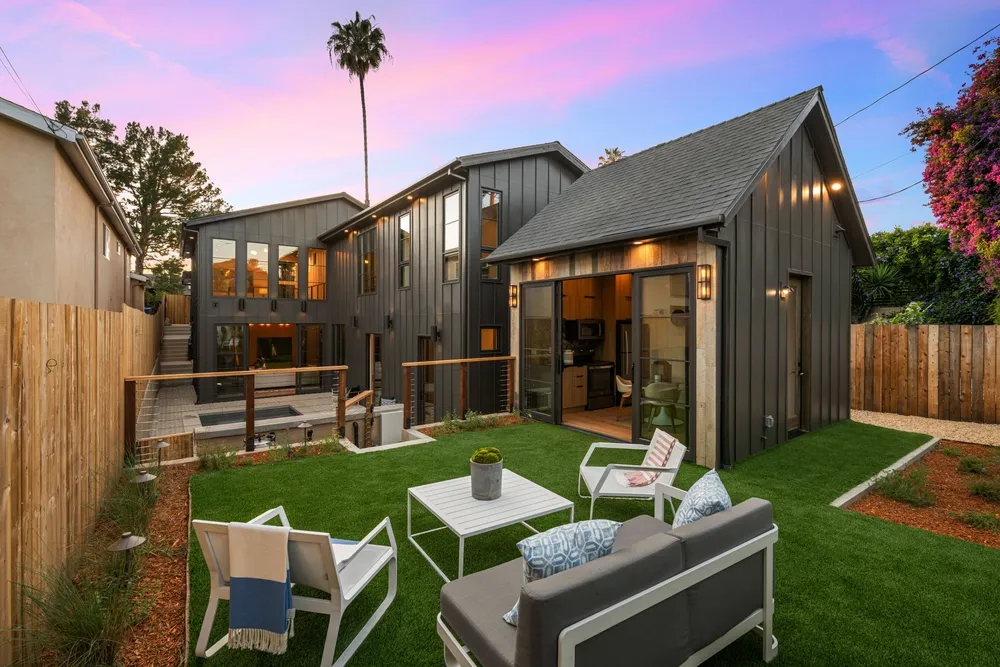
Building an ADU in a Los Angeles backyard has always meant one financial path: rent it out. A homeowner could house a family member or find a tenant, but selling the unit as standalone property required a costly lot split. A policy change already active in parts of California may eliminate that barrier, turning backyard units into independently sellable real estate.
The law is AB 1033, which allows homeowners to sell an ADU as a condominium – separately from the main home – without splitting the lot. According to Jeff Cheung, Founder & CEO of Buildoly, a Los Angeles-based design-build company specializing in ADUs and primary homes, AB 1033 is already active in parts of Northern California and San Diego. He expects it to pass in Los Angeles within the next year or two.
For a city where housing supply has lagged demand for years, that timeline matters. If Los Angeles adopts the law, every homeowner with a qualifying lot gains a new option: build a detached unit and sell it outright, rather than collecting rent month by month.
From Rental Asset to Sellable Property
The financial logic of building an ADU changes when the exit is a sale rather than a lease. Under the old framework, the return was monthly rent – steady but slow to recoup construction costs. Under AB 1033, the return becomes a lump-sum sale at market value. That shifts the risk profile, the financing calculation, and the type of homeowner likely to build.
Cheung says the law will “allow homeowners to be able to sell their ADUs as a condo separately from the main home without having to split the lot.” For a homeowner sitting on a large enough lot in a high-demand neighborhood, building an ADU is no longer limited to a landlord strategy. It becomes a one-time capital event.
Why Permitting Speed Alone Has Not Solved the Supply Gap
Los Angeles has a well-documented shortage of housing units. The typical policy response focuses on permitting speed and zoning reform – making it faster and easier to build. Cheung argues that addresses only half the problem. The other half is whether homeowners have a financial reason compelling enough to start construction in the first place.
“Everyone talks about the housing crisis in L.A. and the limitations of housing stock,” Cheung says. But the question policymakers have not fully answered is “whether there’s a market demand to build that housing stock.” If homeowners can sell a completed ADU at market value rather than collect rent on it, the incentive to build sharpens. Cheung believes the policy will “accelerate the construction that happens in Los Angeles.”
The distinction between permitting reform and demand-side incentives helps explain why ADU construction has not scaled as fast as the zoning changes of recent years would suggest. Cities shortened review timelines and loosened setback requirements, but many homeowners still lacked a financial reason to take on a six-figure construction project for rental income alone.
What This Means for Buyers and Sellers
For homeowners in Los Angeles with lots large enough for an ADU, this policy is worth tracking. The ability to build and sell a unit separately expands options beyond renting and could add significant value to the underlying property.
For buyers, AB 1033 introduces a new class of entry-level housing: smaller, detached units on existing residential lots, sold as condominiums. That could mean more inventory at lower costs in neighborhoods where traditional single-family homes are out of reach.
The law has not yet passed in Los Angeles. The one-to-two-year timeline Cheung cites is his estimate, not a guarantee. And even once adopted, the practical mechanics of condo conversion – HOA formation, shared utility agreements, title structures – are not yet fully standardized across jurisdictions that have already implemented it. Homeowners who build today expecting to sell immediately after adoption may find the process less straightforward than a condo sale in a purpose-built development.
The direction, however, is consistent across the jurisdictions that have moved first. If Los Angeles follows Northern California and San Diego, homeowners with qualifying lots will face a decision that did not previously exist: build to rent, or build to sell. For a city that needs housing at every price level, giving homeowners a reason to choose “sell” addresses a gap that permitting reform alone has not closed.
About the Expert: Jeff Cheung is the Founder and CEO of Buildoly, a construction company offering fixed-price ADU and home rebuild models in fire-affected areas of California.
This article is intended for informational purposes only and does not constitute legal, financial, or investment advice. The views and opinions expressed herein reflect those of the individuals quoted and do not represent an endorsement of any company, product, or service mentioned. Readers should conduct their own due diligence and consult qualified professionals before making any investment decisions.
A perfect storm of economic and regulatory challenges has created the worst environment for new construction in nearly 80 years, according to one prominent Chicago developer who sees alarmin...
Ponte Vedra Beach agent Allyson Mecca of LoKation, argues Jacksonville’s real estate market has fundamentally shifted away from retirees toward younger, high-earning professionals, a t...
Three years ago, Bay Area property owners would have dismissed the idea of celebrating a 6 percent mortgage rate. But in early 2025, many are doing exactly that, driving a wave of refinancin...
Energy storage projects are becoming the frontline defense against environmental inequity in urban neighborhoods historically burdened by polluting power infrastructure, according to a senio...
California’s ambitious housing laws face an ongoing challenge: local governments tasked with implementation often lack understanding of how to properly process lot split applications, ...
Housing affordability challenges now extend beyond low-income households and affect households earning over $100,000 in cities such as Denver, Seattle, and Dallas. According to Marc Norman, ...