Ninety minutes north of Manhattan, the Hudson Valley has evolved from a regional escape into one of the most competitive real estate markets in the Northeast. What was once considered a sleepy alternative to the Hamptons or the Catskills has become a destination in its own right, drawing buyers from across the New York metro area who are looking for something the city cannot offer: space, quiet, and a genuine connection to the outdoors.
The timing of this rise matters. Remote work policies that took hold during the pandemic have become permanent for many professionals, and high-end hospitality brands entering the region have raised its profile as a lifestyle destination rather than a pass-through. Together, these forces have created sustained demand that shows no sign of fading.
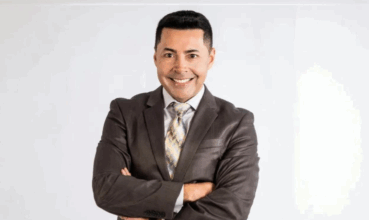
Stefan Bolz, Principal Broker and Owner of Hudson Dwellings Realty, has watched this play out firsthand. His firm serves a client base that is roughly 75 to 80 percent composed of buyers from New York City, Brooklyn, the Bronx, Long Island, and New Jersey. “Our recreational value in our area is really high,” he notes, pointing to the region’s appeal for climbers, hikers, and cyclists.
From Weekend Escape to Permanent Consideration
The typical Hudson Valley buyer journey starts long before anyone contacts a broker. Visitors come up for day trips, then graduate to a few nights on Airbnb, and eventually conclude that ownership makes more sense. “They say, ‘We should just buy something here,'” Bolz explains. “And those are my people.”
That organic path to homeownership reflects what the market offers structurally. The region sits at the intersection of accessibility and authenticity. Direct highway access via I-87, solid bus and rail connections, and a cultural scene that includes orchestras, breweries, and outdoor recreation make it appealing to a wide range of buyers without feeling overdeveloped.
Relocations make up only about 5 percent of transactions, while local buyers account for another 30 to 40 percent, though that segment is shrinking as prices rise. The dominant buyer profile remains the second-home purchaser seeking an antidote to urban life. “They want to hear birds, they want to hear water,” Bolz says. “They want peace and quiet.”
Inventory Constraints and the Rate Lock Effect
Like much of the country, the Hudson Valley is dealing with a persistent inventory shortage driven by homeowners who locked in mortgage rates around 3 percent during the pandemic. Those owners have little financial incentive to sell and take on a new loan at current rates hovering around 6 to 6.5 percent.
“If you’re a seller now and you bought your house in 2020 with a 3% interest rate, you think real hard before you sell,” Bolz observes. Buyer demand significantly outpaces available supply, and that imbalance is unlikely to correct itself quickly.
On the buyer side, the initial shock of rising rates has largely worn off. After roughly a year and a half of hesitation, buyers are recalibrating their expectations. Waiting for a significant rate reduction that may not come is increasingly seen as a losing strategy. “Now they’re more willing to say, ‘This is as good a time as any,'” Bolz notes, pointing out that prices are still rising gradually.
Sellers Still Hold the Cards, But Pricing Discipline Matters
Despite some cooling from the peak frenzy of the pandemic years, sellers retain meaningful leverage. A well-priced listing can still generate multiple offers and close above asking. Bolz recently sold a two-bedroom, one-bath home of around 1,000 square feet, listed at $550,000, that attracted six offers and closed well above $600,000.
The keyword is “well-priced.” Sellers who cling to inflated expectations are learning that overpricing can actually cost them money. A properly priced home attracts competition that drives the final sale price higher. At the same time, an overpriced listing sits, eventually requires reductions, and often closes below what a realistic initial price would have achieved. Concessions remain relatively rare given current demand levels, but seller expectations still need active management.
Where Deals Fall Apart
Tight inventory is creating a less obvious problem: buyers making offers on properties that don’t fully meet their needs simply because something became available. Buyer remorse driven by scarcity rather than genuine fit accounts for roughly one in ten to fifteen transactions falling apart, by Bolz’s estimate.
“People think, ‘I’ve got to buy something,’ so they make an offer, and they get it, and then they realize this wasn’t really my house,” he says. Issues that surface during inspections also play a role, but motivated buyers tend to work through them. The underlying problem is that the motivation was never fully there to begin with.
Sub-Markets Worth Watching
The Hudson Valley is not a monolithic market, and understanding the distinct character of individual towns matters for both buyers and investors. Woodstock commands a premium tied to its cultural cachet. New Paltz draws buyers attracted to its college-town energy. Kingston appeals to Brooklyn transplants looking for urban texture with a mountain backdrop. Gardiner benefits from views of the Shawangunk Ridge, a draw for climbers and outdoor enthusiasts.
For investors looking to deploy capital, Bolz points to two areas he considers undervalued relative to their trajectory. Highland, located roughly ten minutes from the Poughkeepsie train station, still offers more accessible price points and benefits from proximity to rail trails and commuter infrastructure. Ellenville, further southwest, is another market he sees gaining momentum. “It has sidewalks and a beautiful backdrop of mountains,” he notes, adding that buyers increasingly value walkable town centers with retail activity.
The Remote Work Factor
The remote work dynamic continues to reshape buyer behavior in ways that favor markets like the Hudson Valley. Bolz describes clients who commute to Manhattan one day a week and work the rest of the week remotely. This pattern makes second-home ownership financially and practically viable in ways it wasn’t before the pandemic.
As hybrid schedules become more entrenched, the line between second home and primary residence continues to blur, pulling more buyers toward markets that offer both quality of life and reasonable access to the city.
A Different Kind of Practice
Hudson Dwellings Realty recently opened a second office near the Shawangunk Ridge, positioning itself closer to the outdoor recreation community that drives a significant portion of regional interest. But beyond physical expansion, Bolz is focused on what he sees as the firm’s core value: information and risk reduction.
For sellers, that means identifying the most motivated buyers to minimize the chance of a deal collapsing between contract and closing. For buyers, it means full disclosure of everything that could affect their experience with a property – including things a buyer might not think to ask about. “If you buy a house here and three miles up the road, there’s a small racetrack; when the wind comes from the west on a Friday night, you will hear it,” Bolz says. “That’s basically my job.”
In a market where inventory is tight, and buyers sometimes move faster than their own certainty warrants, that grounded, information-first approach may be exactly what keeps transactions together, and what separates a successful purchase from an expensive mistake.
About the Expert: Stefan Bolz is Principal Broker and Owner of Hudson Dwellings Realty, serving the Hudson Valley real estate market with a client base that is roughly 75 to 80 percent composed of buyers from the New York City metro area.
This article is based on information provided by the expert source cited above. It is intended for general informational purposes only and does not constitute legal, financial, or real estate advice. Readers should conduct their own research and consult qualified professionals before making any real estate or financial decisions.
The commercial real estate investment world has long operated on a simple asymmetry: large institutional firms like Blackstone and KKR can review hundreds of deals because they employ dozens...
The New York metropolitan area has long shaped real estate demand across northern New Jersey, but the dynamics playing out in Hudson and Bergen Counties right now reflect something more spec...
“Price is the most important part of your marketing. You have to price the property correctly,” says Camilo Perez, Broker of Record at Florida Flat Fee Homes, and CEO and Broker ...
Arizona’s real estate market shows a widening gap between luxury and entry-level segments. High-end properties in prime locations continue to appreciate. Lower-priced homes and condos are ...
A third-generation real estate professional with Coldwell Banker Realty in northern New Jersey’s competitive market, Ryan Bruen established his career through an unconventional path. D...
In the picturesque Adirondacks of New York, a former executive from Google is applying big data principles to transform historic properties into thriving hospitality ventures. Rick Vidal, ow...