
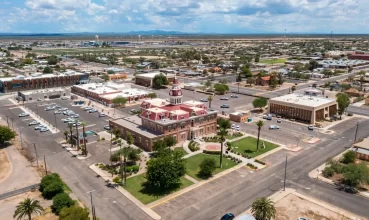
San Tan Valley’s incorporation marks the largest single shift from county to city governance in U.S. history, with about 100,000 residents moving from Pinal County jurisdiction to self...

Inside the Structural Hurdles Complicating Growth in Rome-Floyd County

Written by:
Date:
20 Nov 2025
Share via Facebook

Share via Linkedin

Share via X

Copy to clipboard


Rome-Floyd County’s development sector is facing significant obstacles as outdated regulations and infrastructure limitations slow new projects, even as demand for housing and commercial space reaches record levels. Planning and Zoning Director Brice Wood, who has nearly nine years of experience overseeing the county’s development, detailed these challenges in a recent interview, pointing to a zoning ordinance written more than 25 years ago and strategic infrastructure decisions that shape where and how growth occurs.
Wood said the county’s zoning ordinance, last updated more than two decades ago, no longer matches current development realities. “We’re currently rewriting our zoning ordinance. It’s currently 25 plus years old, and it is outdated and many places obsolete,” Wood said. In the past year, demand for development has surged, but regulatory frameworks have not kept pace with new housing models or industry needs.
Wood identified several major hurdles:
Regulatory Obsolescence: The ordinance still references outdated business models, such as video rental stores, and does not address modern industries like data centers. “Nobody knew what a data center was 20 years ago. I mean, we were in the infancy of the internet. That was before the iPhone,” Wood said. The lack of provisions for new business types creates uncertainty for investors.
Infrastructure Bottlenecks: Geographic features, including the city’s seven hills and three rivers, limit transportation options. “Because we’re the city of seven hills and three rivers, we need more bridges. Traffic bottlenecks at our bridges because we don’t have enough of them,” Wood explained. These constraints slow both residential and commercial expansion.
Housing Diversity Restrictions: The current ordinance favors either suburban single-family homes or large apartment complexes, with little allowance for “missing middle” housing such as duplexes or townhomes. “Our zoning ordinance that we’ve had for the last 20 years, it truly promoted suburban, single family homes or giant apartment complexes, but nothing in between the two,” Wood said.
Development pressure is most intense on the eastern side of the county, where proximity to Bartow County and interstate access make the area attractive to both residents and businesses. “You can just about put a line down the middle of the county, and the eastern side is seeing a lot more pressure than the West,” Wood noted.
To address these issues, the county has begun investing in water and sewer infrastructure to support targeted growth. “We’ve made infrastructure investments, whether it’s water or sewer, to accommodate that growth in the future. And of course, by not making a bunch of infrastructure investments in the western side of the county, it kind of limits that growth too,” Wood said. Additionally, the county has mapped all vacant city lots and published the data online to encourage infill development.
Developers are adapting by phasing projects and exploring alternative housing types. Accessory dwelling units, initially met with community hesitation, have become popular with families seeking multigenerational living solutions.
Wood expects future growth to focus on mixed-use and walkable development that reduces transportation needs. “The name of the game for us right now is what we hope will be smart growth. It’s sustainable growth,” he said. The county’s efforts to modernize regulations and infrastructure aim to ensure that new development can meet changing needs while preserving community character.
Similar Articles
Explore similar articles from Our Team of Experts.