The industrial real estate market in Phoenix is seeing a sharp rise in off-market transaction activity, with buyers outpacing sellers in what has become a clear buyer-driven environment, according to Alex Bluth, Vice President of Investments at Menlo Group Commercial Real Estate. In a recent interview, Bluth discussed the notable shift in market dynamics and its effect on deal volume.
“There’s more interest in purchasing than there is selling right now. And frankly, I would say it’s not even close,” said Bluth, who has seven years of experience in the Phoenix market and focuses on off-market industrial and land transactions. “I’m getting a lot more groups that want to buy and deploy capital, and they are not wanting to sell based out of their portfolios at the moment.”
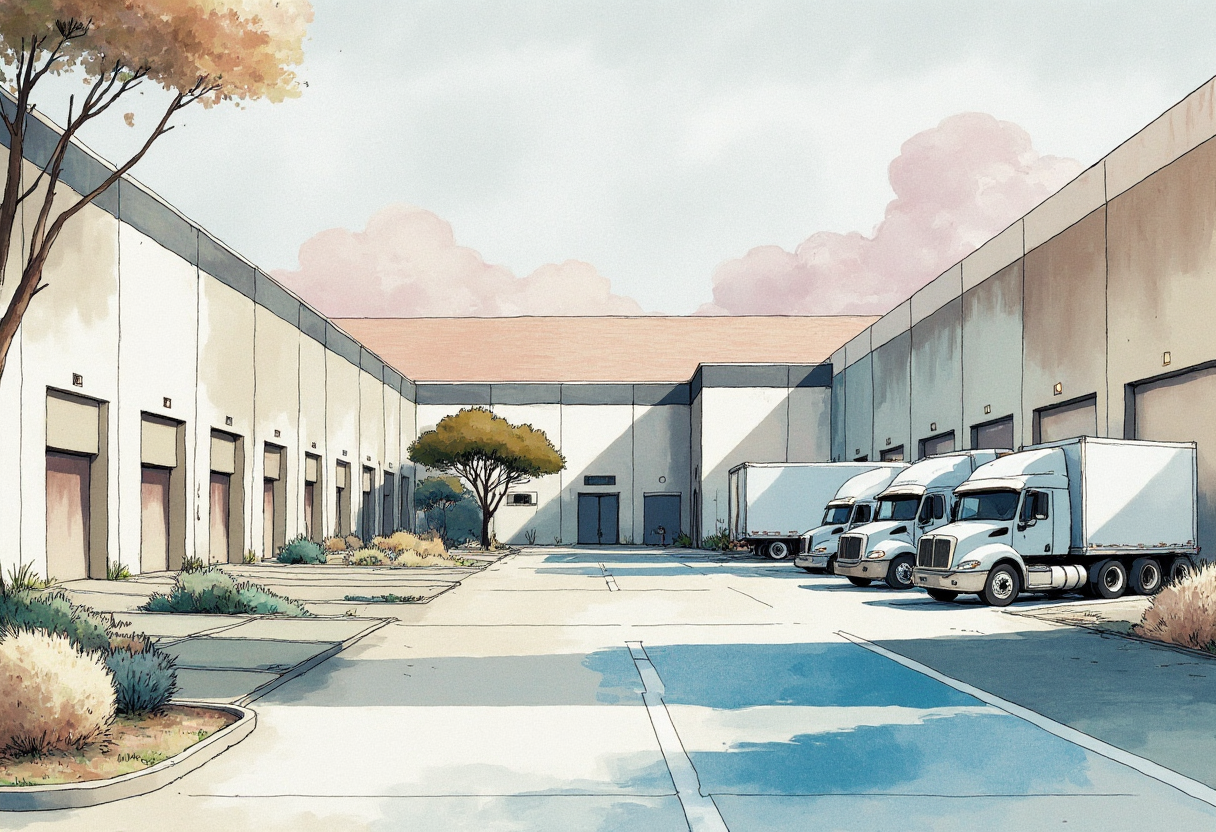
Phoenix’s off-market industrial activity has increased significantly in recent months, with institutional buyers and family offices driving demand. Bluth recently closed an off-market 850,000 square foot industrial facility that drew interest from over a dozen qualified buyers, ultimately selling at under $70 per rentable square foot, well below market rates.
Bluth outlined several dynamics behind the recent rise in off-market transactions. He noted that much of the current purchasing activity, particularly in the industrial sector, is concentrated in the $20 to $60 million range. “I’m seeing right now, a lot of the purchasing demand, at least in the industrial space, for existing acquisitions, is in that $20 to $60 million range,” he said. Off-market deals, he added, are yielding returns north of a six cap, significantly higher than the mid-five cap rates typical of fully marketed Class A assets.
This surge is being driven primarily by institutional players, high net worth individuals, and family offices competing for limited inventory. A recent example was a Tempe industrial portfolio priced at $50 million that drew over 100 confidentiality agreements, underscoring robust demand. At the same time, investors have largely adjusted to current borrowing costs. “People are recognizing that the interest rate scenario is just, it is what it is at this point,” Bluth said. “We’re not getting huge dips or rate cuts, and so people are starting to underwrite accordingly.”
Bluth noted that current conditions favor off-market transactions, allowing buyers to achieve better returns than through traditional marketed deals. The off-market approach provides more competitive pricing and maintains seller confidentiality, which is important for many institutional owners who prefer to avoid broad market exposure.
The increase in off-market activity signals a broader market adjustment, with sophisticated investors now moving away from a “wait and see” stance and actively deploying capital in opportunities that offer higher yield premiums compared to marketed alternatives.
The Midwest multifamily market has undergone a dramatic transformation over three decades, evolving from a fragmented, locally-owned market to one that now attracts sophisticated institution...
The rise of artificial intelligence in real estate has sparked intense debate about the future role of agents, but according to Brad Weisman, a 33-year industry veteran and Keller Williams p...
Two consecutive hurricane seasons have divided Sarasota’s waterfront real estate market, with newer, hurricane-resistant homes commanding significant price advantages while older propertie...
A surprising trend is emerging in Connecticut’s competitive housing market: young buyers are increasingly relying on family wealth and unconventional funding sources to compete in an e...
Miami’s luxury pre-construction market requires buyers to commit substantial capital years before a property is built. This exposes them to significant financial risk that is not refle...
The residential market in Northeast Florida saw a striking 40% price surge during the COVID period, followed by a notable correction that pulled values back by 10% to 15% across the city, ac...